
As reported on November 11, 2026, at 22:43 UTC+8, bitcoin was trading around $73,500 after five consecutive weekly losses. Options traders on Derive had raised their estimated chance of bitcoin finishing Christmas below $70,000 from 15% a week earlier to 31%. Over the same period, the estimated chance of a finish above $80,000 fell from 53% to 26%, according to Derive founder and CEO Nick Forster.
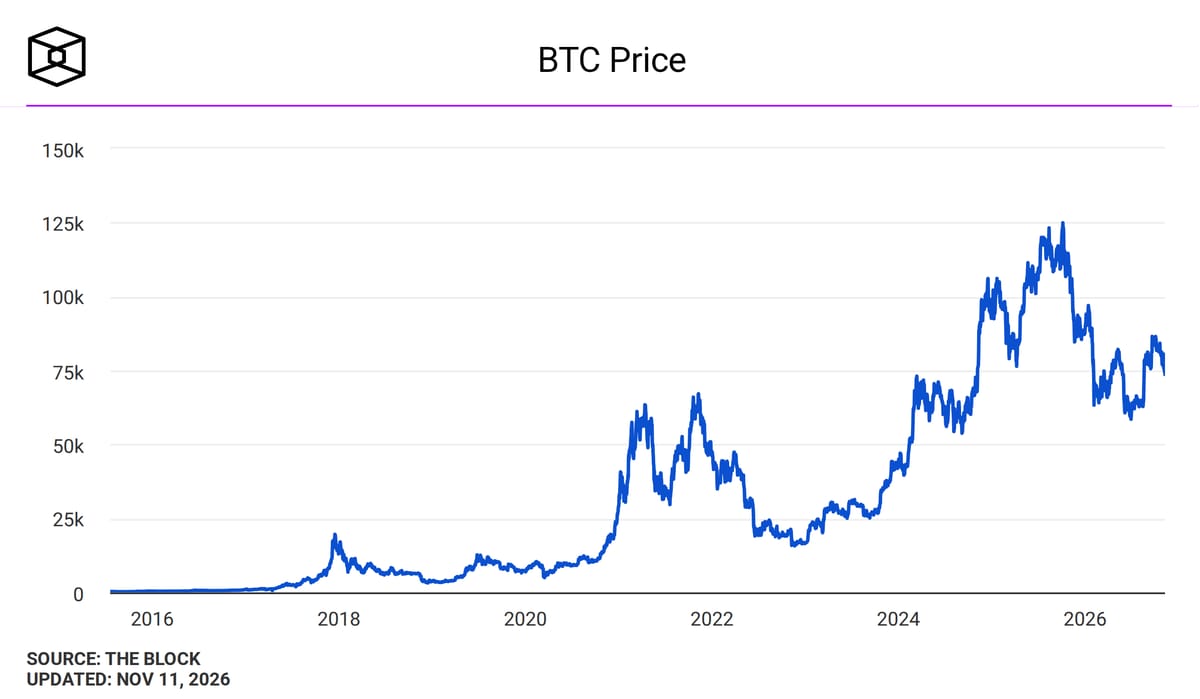
Options demand turns defensive
Forster told The Block that downside protection through puts cost more than comparable upside exposure through calls. Bitcoin options trading on Derive totaled $418 million the previous week, up 37%; puts accounted for 55% of premiums traded, versus 36% the week before.
He also described a wallet that spent approximately $14,000 to protect 300 BTC against a drop below $60,000 by November 27. According to Forster, the position could pay up to $3 million if bitcoin fell below $50,000. That trade illustrates demand for protection, not a forecast that those prices will be reached.
Leverage leaves room for a squeeze in either direction
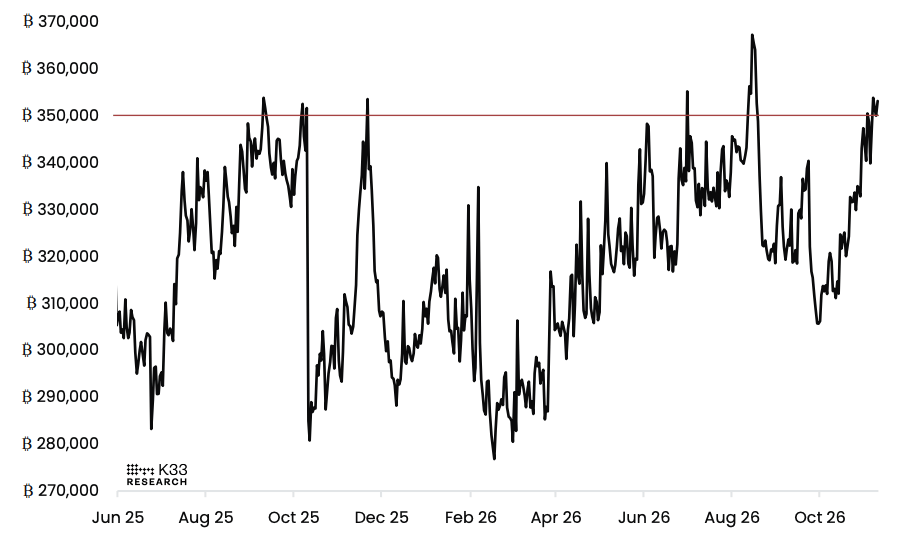
K33 reported that bitcoin perpetual-futures open interest stood near 353,000 BTC on November 10, a level exceeded on only 1.2% of trading days over the preceding two years. Open interest had risen 12% over 30 days while bitcoin lost 10%, according to K33 Head of Research Vetle Lunde.
Lunde said a further breakdown could trigger long liquidations, while a recovery could force short covering. Either could amplify a move as leveraged positions unwind—why he described the market as “ripe for a squeeze.” The source also reported more than $1 billion in crypto long liquidations on November 9 as bitcoin fell below its 50-week moving average; that figure was not limited to bitcoin.
Macro and fund flows add context
Bitcoin slipped back below $74,000 on November 10 following the release of October’s U.S. consumer price index. Monthly prices rose 0.4%, against expectations of 0.3%, and futures traders priced in further Federal Reserve tightening at the December meeting. The U.S. producer price index release was next on the calendar that Friday.
K33 measured bitcoin’s 30-day correlation with the Nasdaq at 0.75, in the 99th percentile of readings since 2020. Lunde reviewed 16 earlier strong Nasdaq rebounds from corrections: bitcoin rose in eight of the nine rebounds that continued higher, with a median 20-day gain of 2.9%. It fell in all seven failed rebounds, with a median loss of 21% over the following 20 days. Those historical groups show sharply different outcomes, not which path the market would take next.
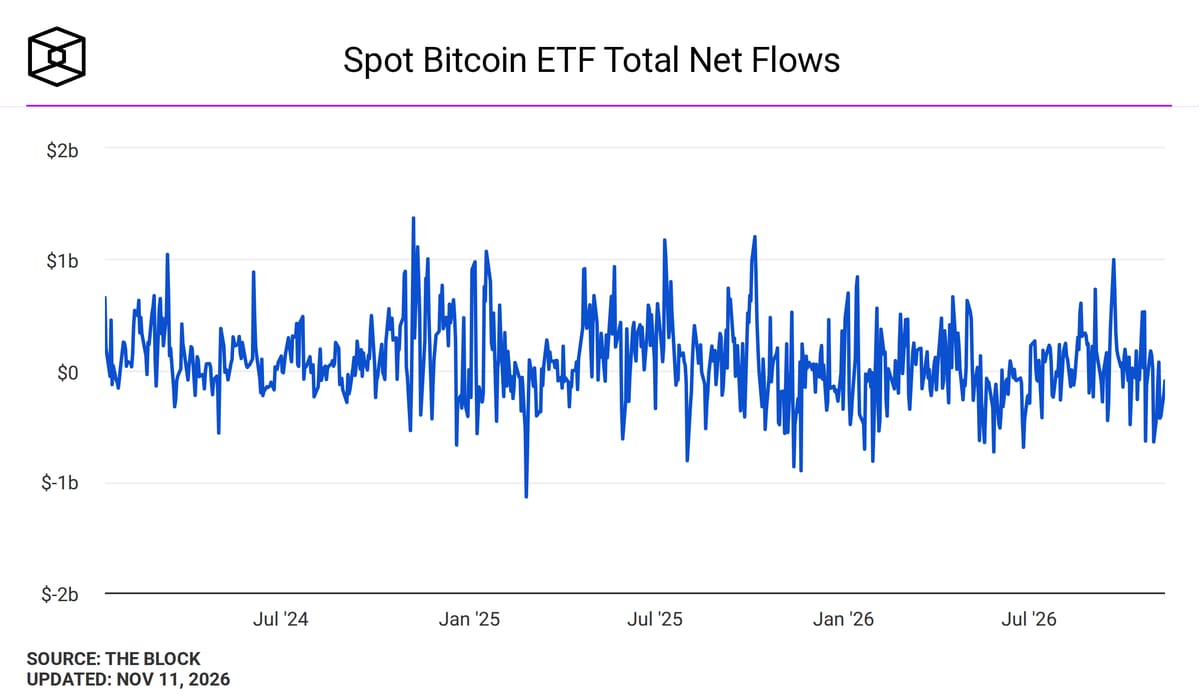
U.S. spot bitcoin ETFs recorded $1.28 billion in net outflows the previous week and a further $296 million on November 9–10, according to data compiled by The Block. The funds had also turned negative for the year. Separately, K33 reported withdrawals totaling 31,652 BTC from global bitcoin ETPs over the preceding seven trading days.
Source: theblock.co (originally published 2026-11-11 22:43 UTC+8)