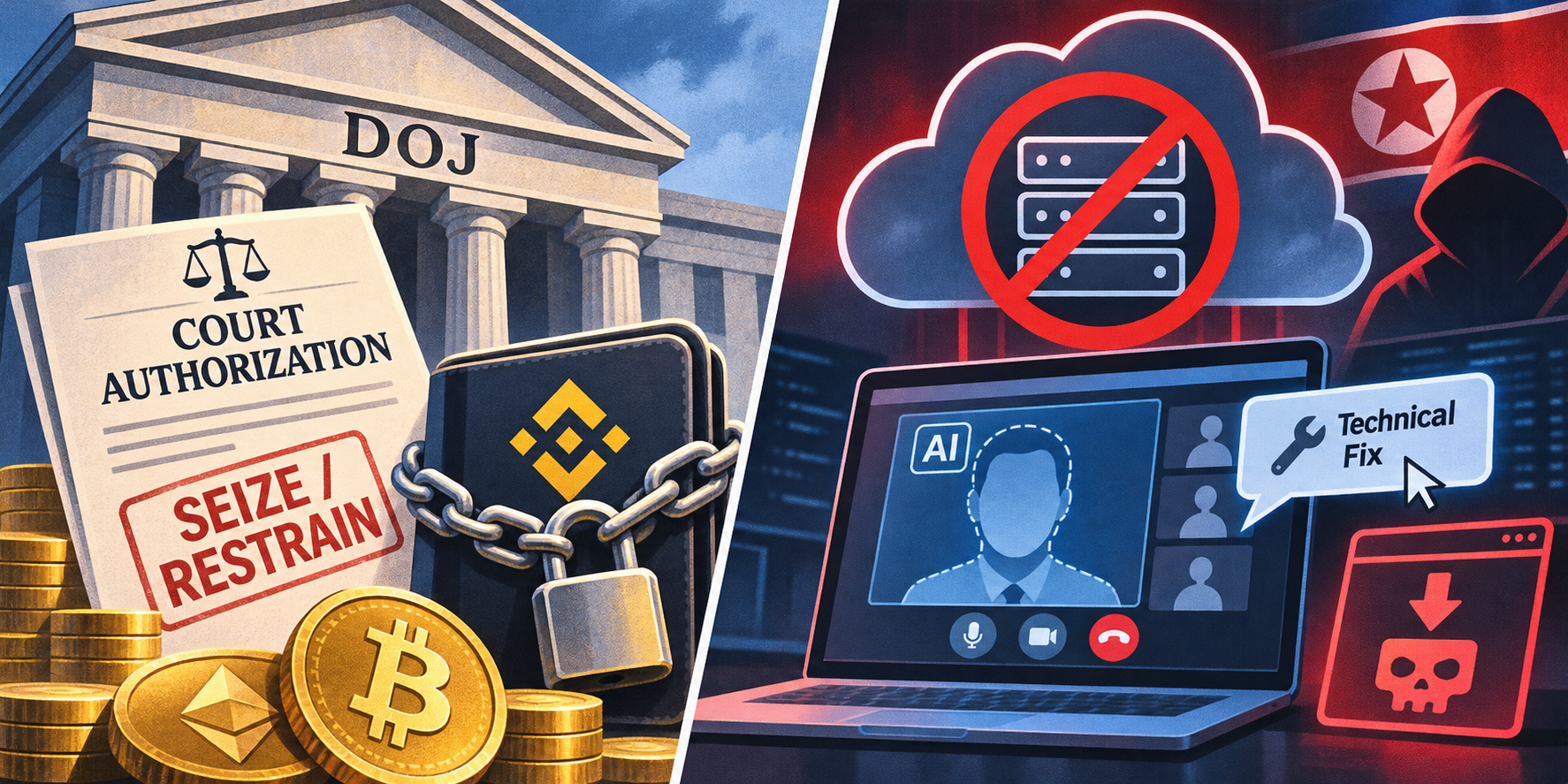
As reported on November 13, 2026, the US Department of Justice said it had obtained court authorization to seize or restrain more than $1.2 billion of the $6.3 billion in cryptocurrency stolen from Binance. The order covers part of the more than $2.7 billion in stolen assets that US authorities and private-sector partners had frozen since the October 29 hack. Investigators were still working to recover additional funds.
The FBI attributed the Binance hack to North Korea’s TraderTraitor group. Kim Yo Jong, sister of North Korean leader Kim Jong Un, denied North Korea’s involvement. Binance said it had covered the affected assets with its own funds and that a new proof-of-reserves snapshot showed at least one-to-one backing for customer assets.
A separate operation targeted FaceStealer. The DOJ said US authorities seized cloud infrastructure used by the North Korean social engineering campaign, which it said had stolen more than $400 million in cryptocurrency over the preceding 18 months. According to the department, the attackers used secretly recorded footage of previous victims and AI-generated deepfakes of prominent crypto figures to build trust on video calls, then used bogus technical fixes to trick targets into installing malware.
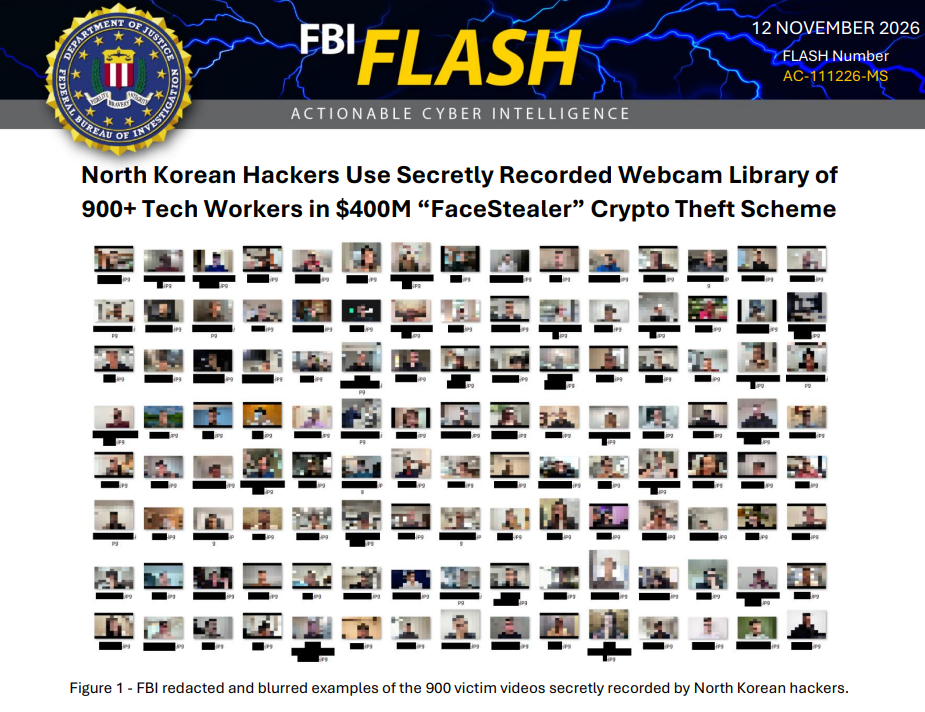
The campaign targeted people working in crypto and Web3 and, increasingly, open-source developers and maintainers whose devices and software repository accounts the attackers sought to access. The FBI said it seized more than 900 webcam videos of victims under a federal warrant and published guidance for preventing or responding to a compromise.
The DOJ said the FaceStealer attackers are publicly known by several names, including Sapphire Sleet, UNC1069, Dangerous Password, CryptoCore, APT38, BlueNoroff and Stardust Chollima. In a separate November 2025 action, the department had targeted about $15 million in cryptocurrency linked to North Korean hackers known as APT38.