On November 11, 2026, at 20:12 UTC+8, ChainCatcher reported a Binance Research study of where institutional crypto capital had gone.
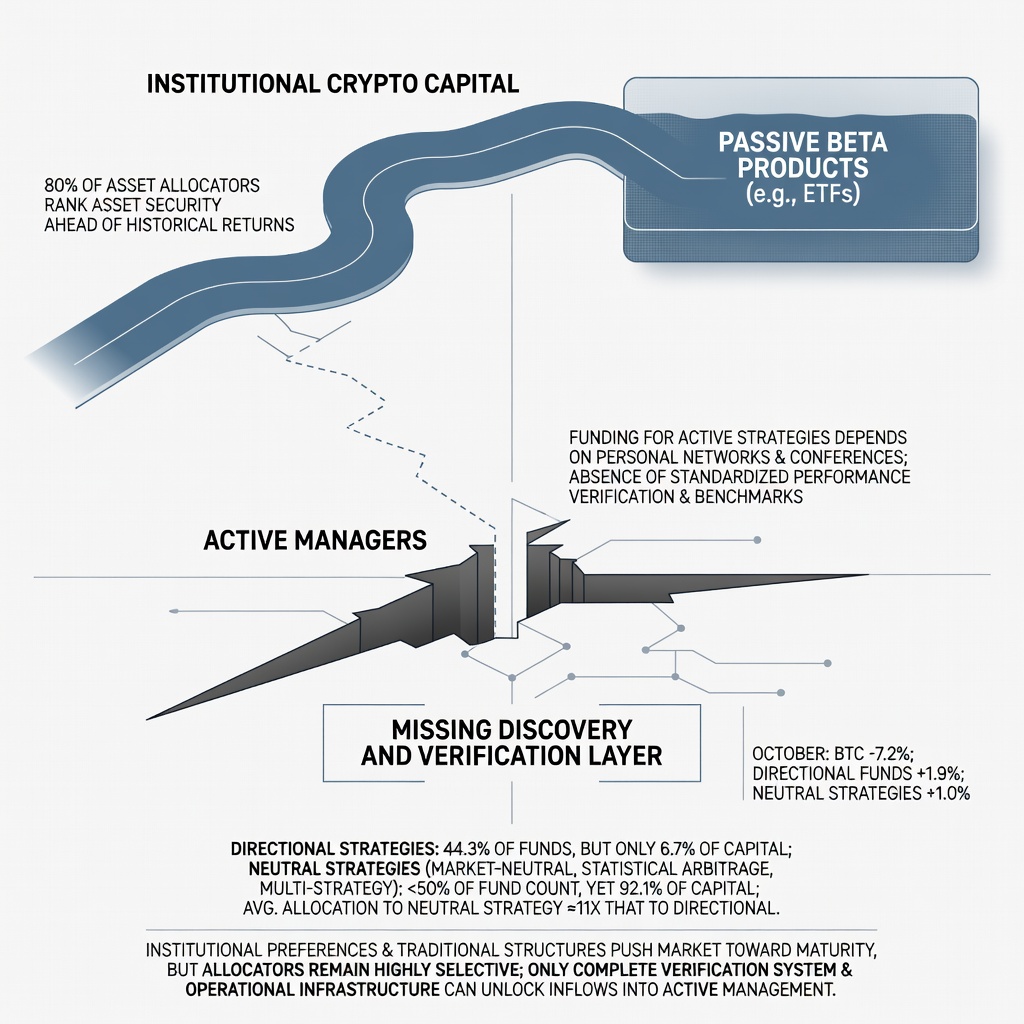
The report’s finding is narrow and specific. Institutional money had already entered the crypto market in size. It had flowed mainly into passive beta products, such as ETFs. Active management had not kept pace.
Binance Research does not attribute that gap to a lack of talent or a lack of returns. It points to a missing middle layer: discovery and verification between capital and managers.
As of the report, funding for active crypto strategies still depended heavily on personal networks and conferences. Standardized performance verification and a benchmark system were absent.
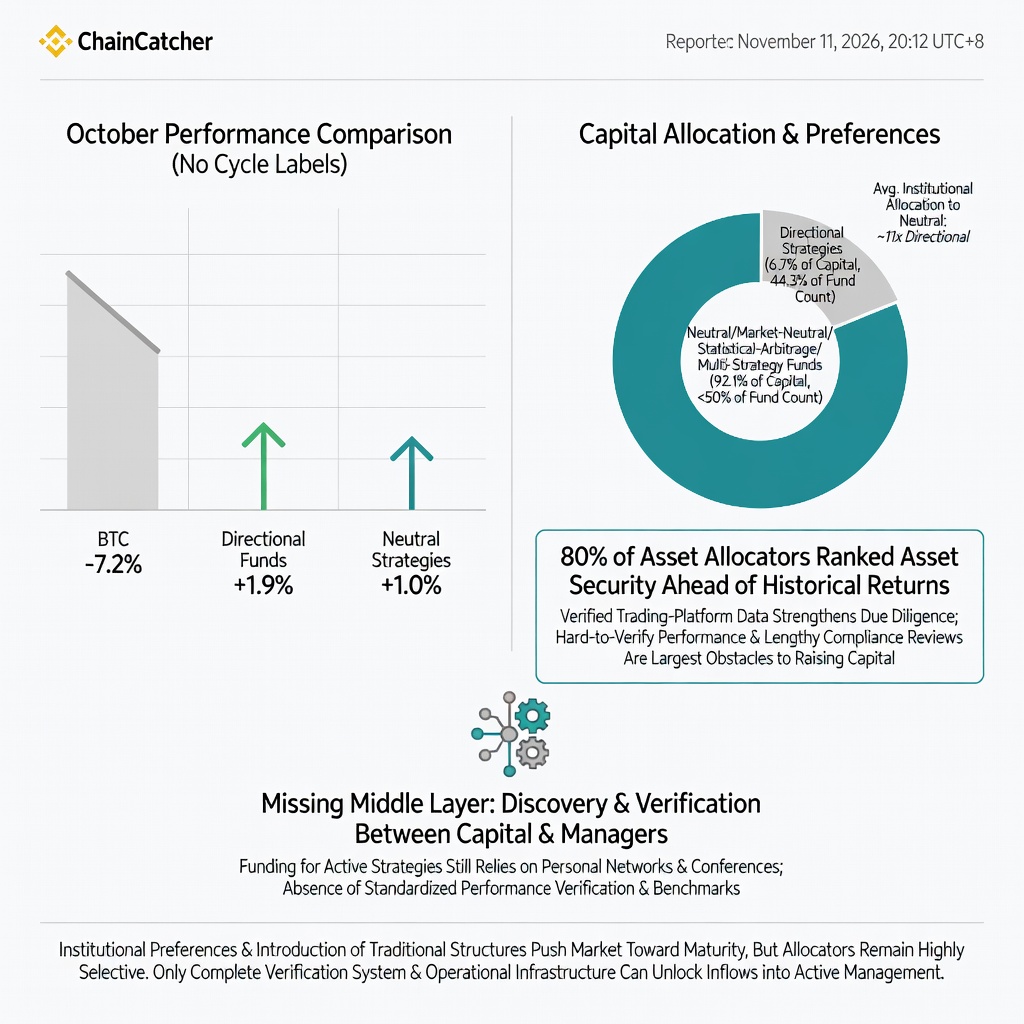
The survey findings are equally specific. Eighty percent of asset allocators ranked asset security ahead of historical returns. Verified trading-platform data, the report says, can significantly strengthen due diligence. Managers said performance that is hard to verify, together with lengthy compliance reviews, was the largest obstacle to raising capital.
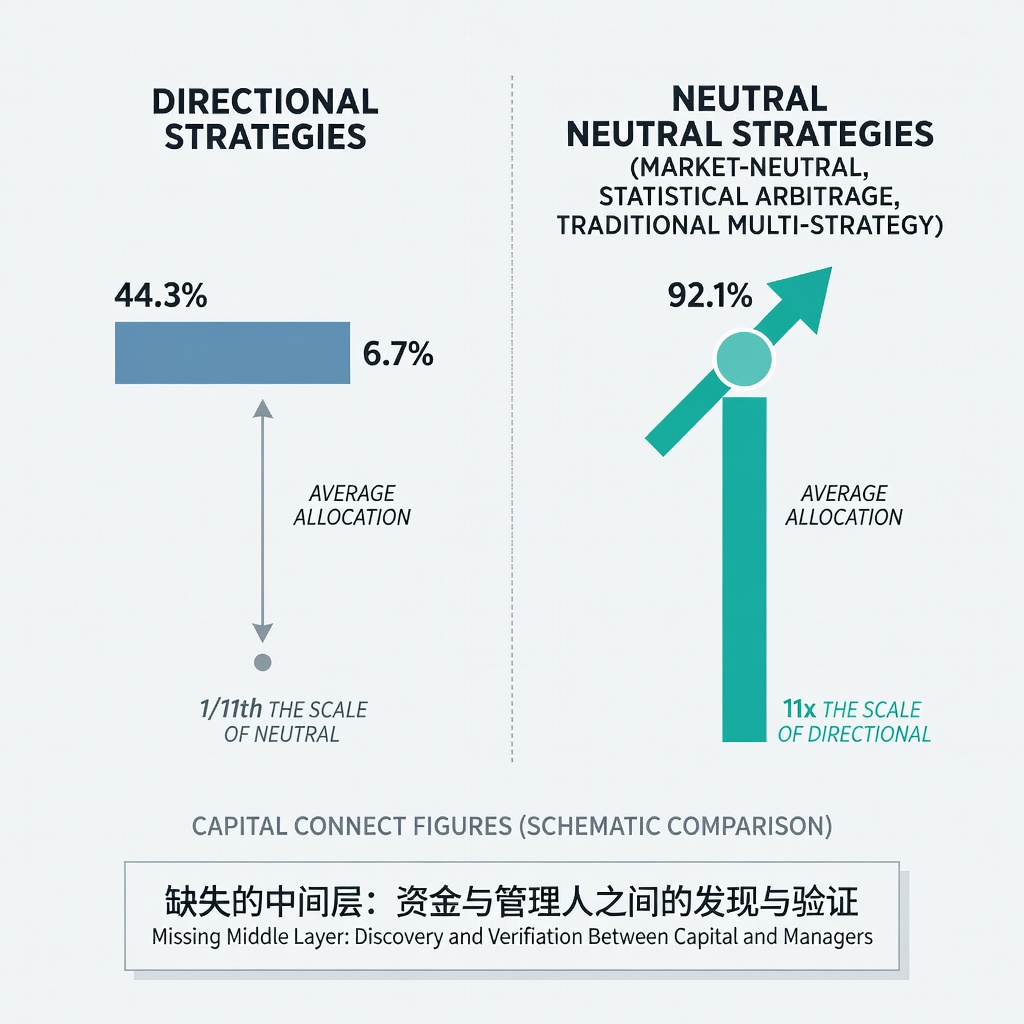
Capital Connect figures in the same report separate fund count from capital held. Directional strategies accounted for 44.3% of funds but only 6.7% of the capital. Market-neutral, statistical-arbitrage, and traditional multi-strategy funds were less than half of the fund count, yet held 92.1% of the capital. The average institutional allocation to a neutral strategy was about 11 times the average allocation to a directional strategy.
The report also records an October window, without tying those results to a broader cycle call. BTC fell 7.2%. Directional funds recorded an average gain of 1.9%. Neutral strategies recorded an average gain of 1.0%.
Binance Research’s own conclusion, as carried by ChainCatcher, is that institutional preferences and the introduction of traditional structures were pushing the market toward maturity, while allocators remained highly selective. Only a complete verification system and operational infrastructure, it said, could truly unlock inflows into active management.
Original article: ChainCatcher