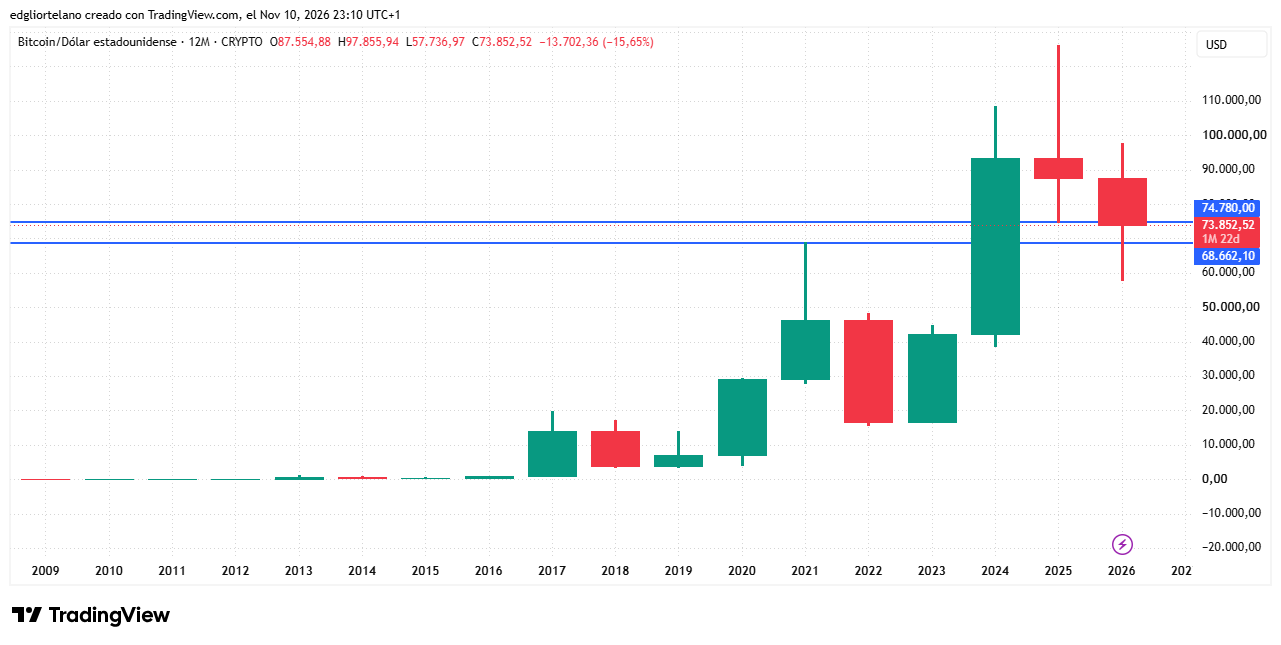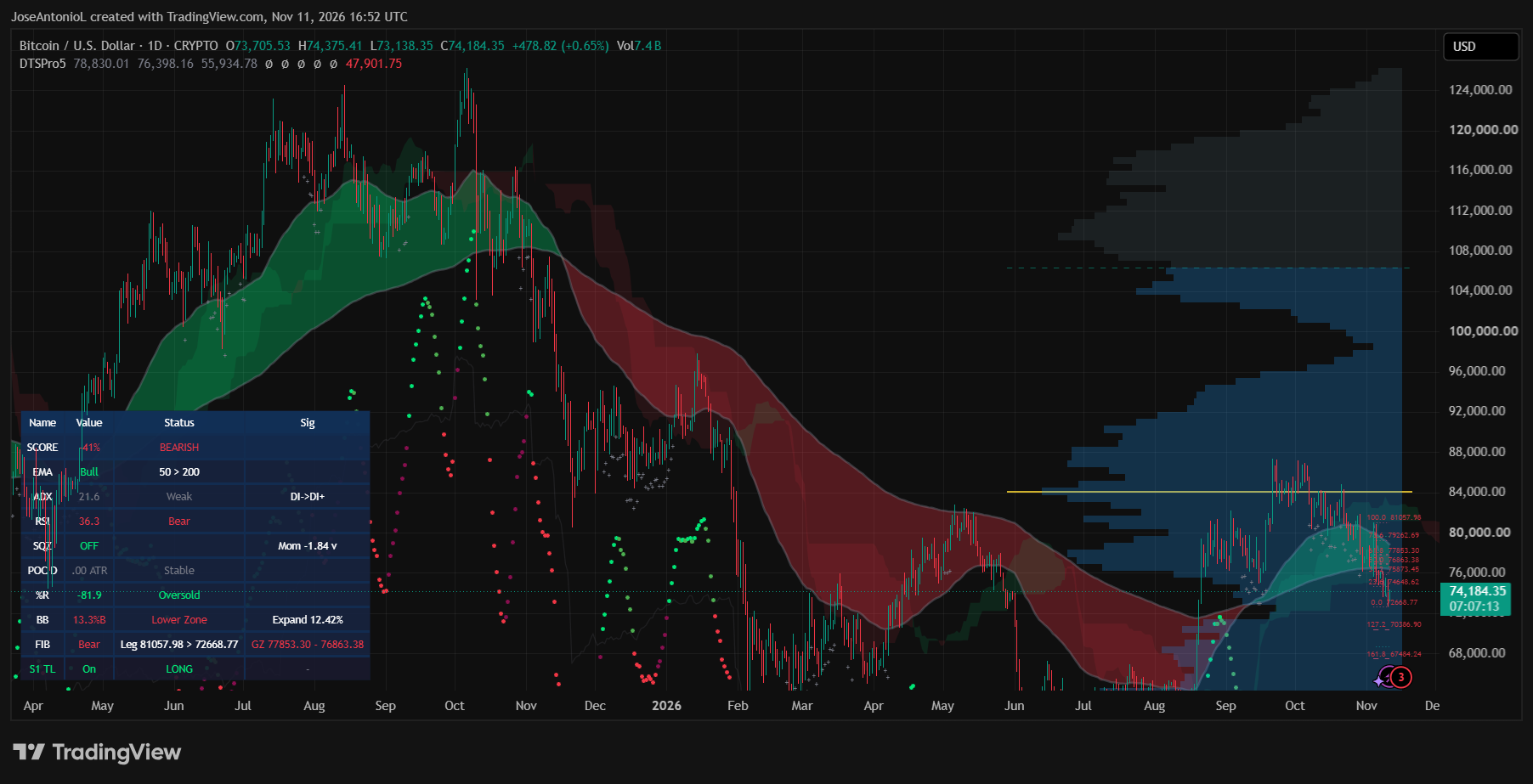
As of November 10, 2026, Bitcoin was trading around $73,850 and was down 15.65% for the calendar year, according to a Decrypt report published November 12, 2026. The coin had already finished 2025 down 6.34%. Its 2026 opening price was roughly $87,500. If it failed to get back above that level before December 31, two calendar years would close in the red for the first time in its 18-year history.
The year was not finished. The report counted 50 days left in 2026. From about $73,850, Bitcoin would have needed a gain of about 18.5% to reclaim the opening price and end the year positive. A third down year in 2027 was mentioned only as a hypothetical, not as an outcome already in view.
The length of a red streak is not the same as the size of the loss. Earlier annual crashes were far deeper: 73.56% in 2018 and 64.27% in 2022. The 6.34% decline in 2025 was mild beside those years. Adding 2026’s loss of roughly 16% produced a combined decline of approximately 21% after compounding — a fraction of prior crypto winters, even if the run of negative calendar years would be longer.
Calendar boundaries also understate the path between them. Bitcoin reached approximately $126,000 in October 2025, then fell below $58,000 during 2026, a decline exceeding 50%. That move from the high was much sharper than the roughly 21% combined result of the two annual candles. Performance in 2024 supplies a different entry point: the cryptocurrency surged more than 120% that year, so a buyer at the start of 2024 would still have been ahead of that purchase despite the later drop. Measuring from the October 2025 peak does not tell the same story.
Analysts cited in the report pointed to a more institutional investor base, spot exchange-traded funds, and deeper market liquidity as possible reasons these calendar-year drawdowns looked smaller than in earlier cycles. Those are offered explanations, not a shown cause. The same structural changes had not removed large crashes. A market can lose ground slowly across more than one calendar year without matching the damage of a single catastrophic year. Two milder red years in sequence do not, by themselves, show that the mechanism of earlier winters has been replaced.
The older record is a sequence, not a rule about what must come next. Decrypt noted that each previous negative calendar year had been followed by a positive one, and that even 2018 and 2022 did not produce consecutive annual losses. Bitcoin gained roughly 92% in 2019 after the 2018 collapse and more than 155% in 2023 after 2022. The similarity is narrow: back-to-back red calendar years had not occurred. The difference is the scale of the preceding damage — crashes of about 74% and 64%, not a compounded two-year loss near 21%. Order in past years does not determine how 2026 had to close.
Original report: Bitcoin Faces First Back-to-Back Annual Losses in History, But There’s a Catch, Decrypt, November 12, 2026.