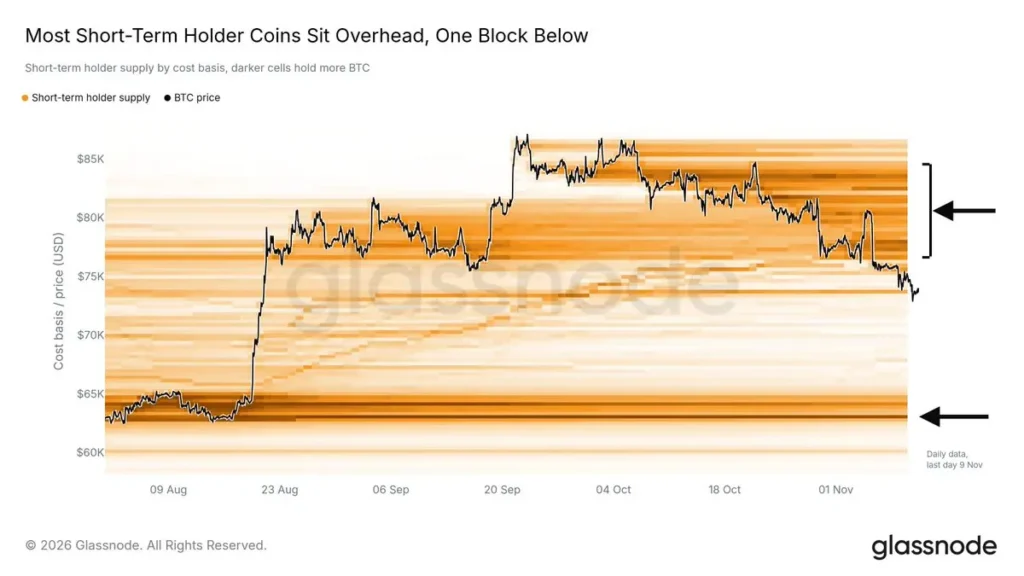
Bitcoin was trading near $74,000 in Glassnode’s November 11, 2026 assessment, below the $75,600 average cost basis of short-term holders. Glassnode reported weakening demand through stablecoin supply, US spot ETF flows and Coinbase pricing. It also found signs of reduced liquidation risk near the market price and buying by two large-wallet groups. Those signals pointed in different directions, not to a confirmed reversal.
Recent buyers moved into loss
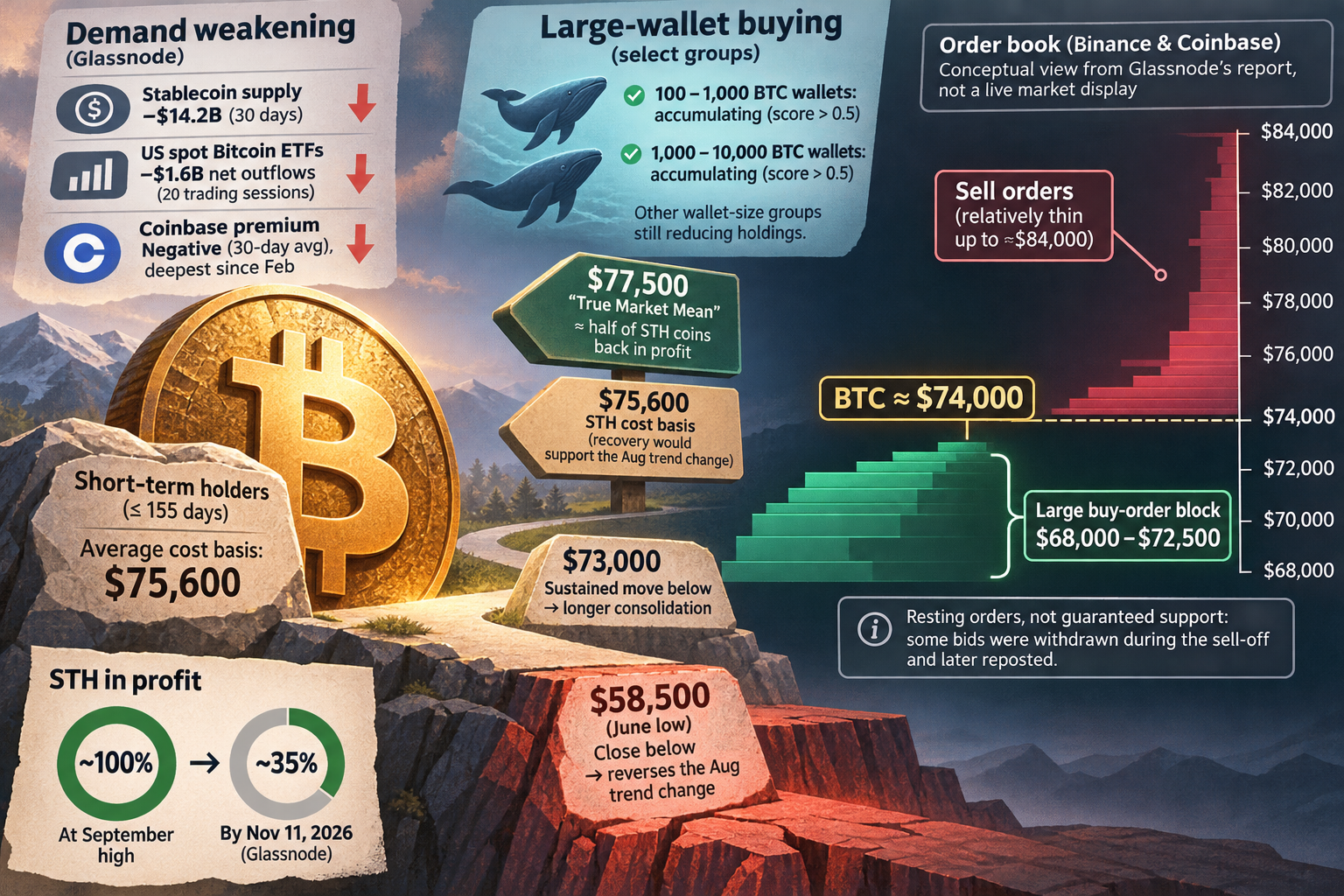
Glassnode defines short-term holders here as investors who bought within the previous 155 days. At Bitcoin’s September high, nearly all their coins were in profit; by the report, about 35% were. Roughly two-thirds of their coins had been bought above the then-current price, across three purchase bands extending up to $83,600. Glassnode said those holders might sell into a rebound to break even.
The broader structure had not yet been overturned in Glassnode’s assessment. September marked Bitcoin’s first higher high since its 2025 all-time high, and the price remained above the June low of $58,500. A return above Glassnode’s $77,500 “True Market Mean” would put about half of short-term holder coins back in profit.
Demand and cross-market signals
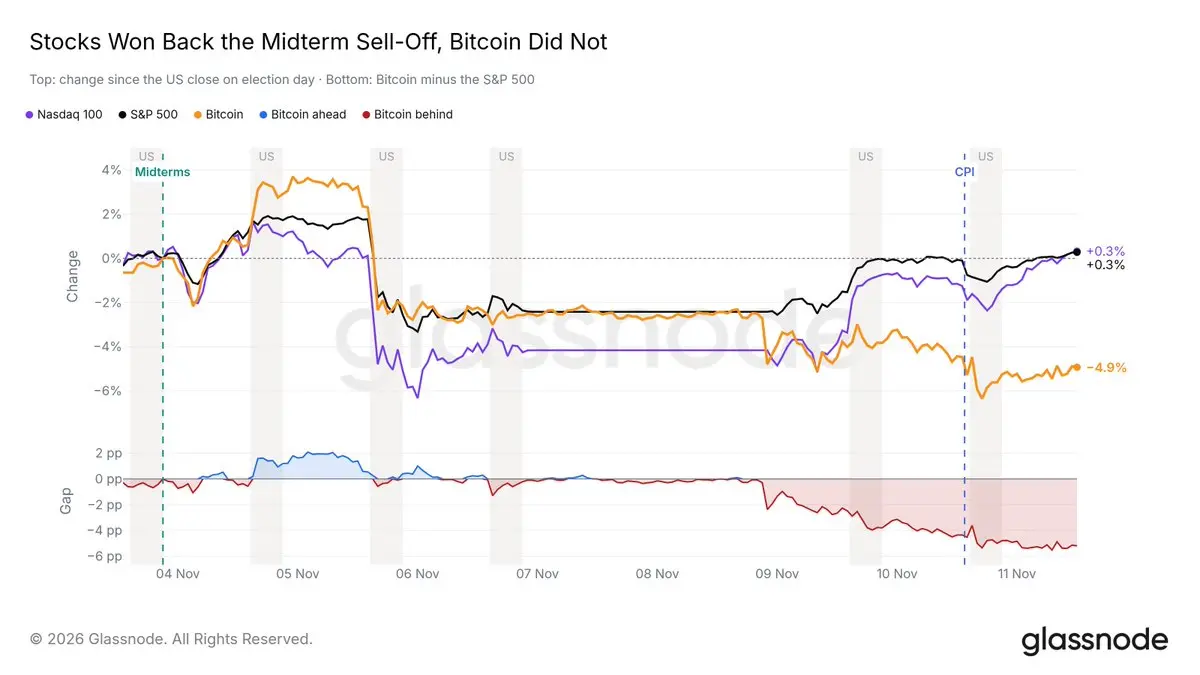
The sell-off that began November 5 affected both Bitcoin and stocks, according to Glassnode. From November 9, their paths diverged: the S&P 500 and Nasdaq 100 recovered above their election-day closes, while Bitcoin fell again after the November 10 CPI release and remained about 5% below its election-day close. Regaining Bitcoin’s $77,800 election-day close would close that particular gap with equities; the sequence alone does not establish what caused Bitcoin’s decline.
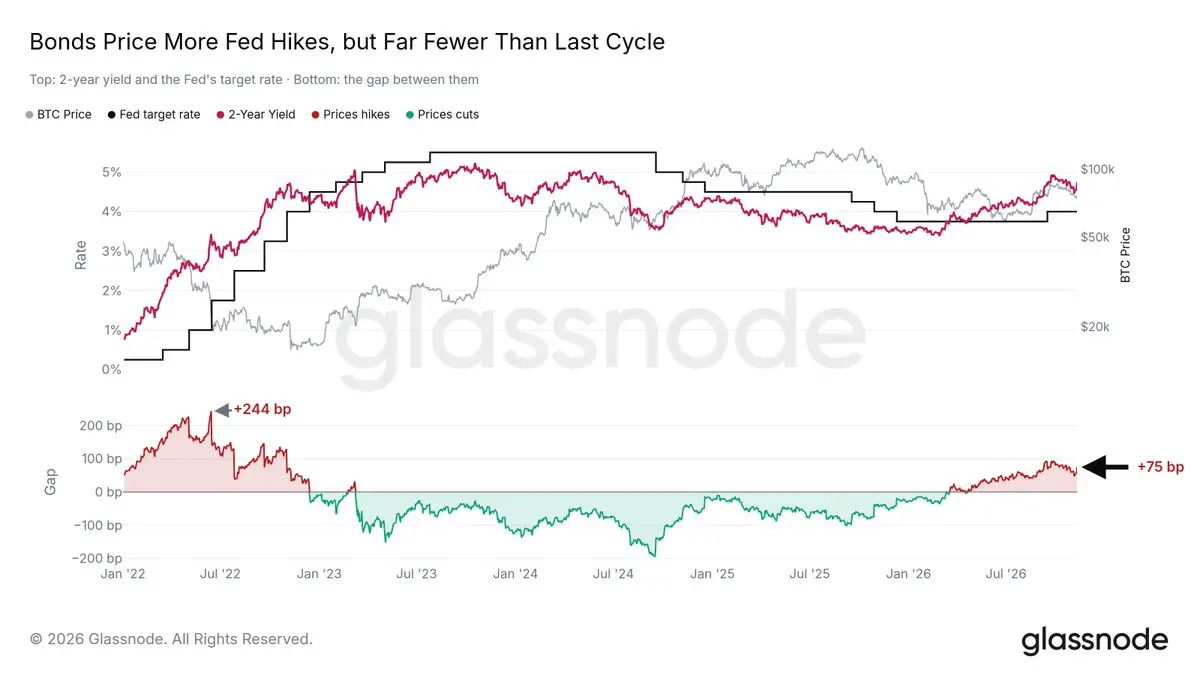
Glassnode also noted a rates headwind. The two-year US Treasury yield was 4.75%, 75 basis points above the stated 4% Federal Reserve policy rate. It interpreted that gap as bond-market pricing for further hikes, while noting that the comparable gap reached 244 basis points in June 2022 and had narrowed since late October.
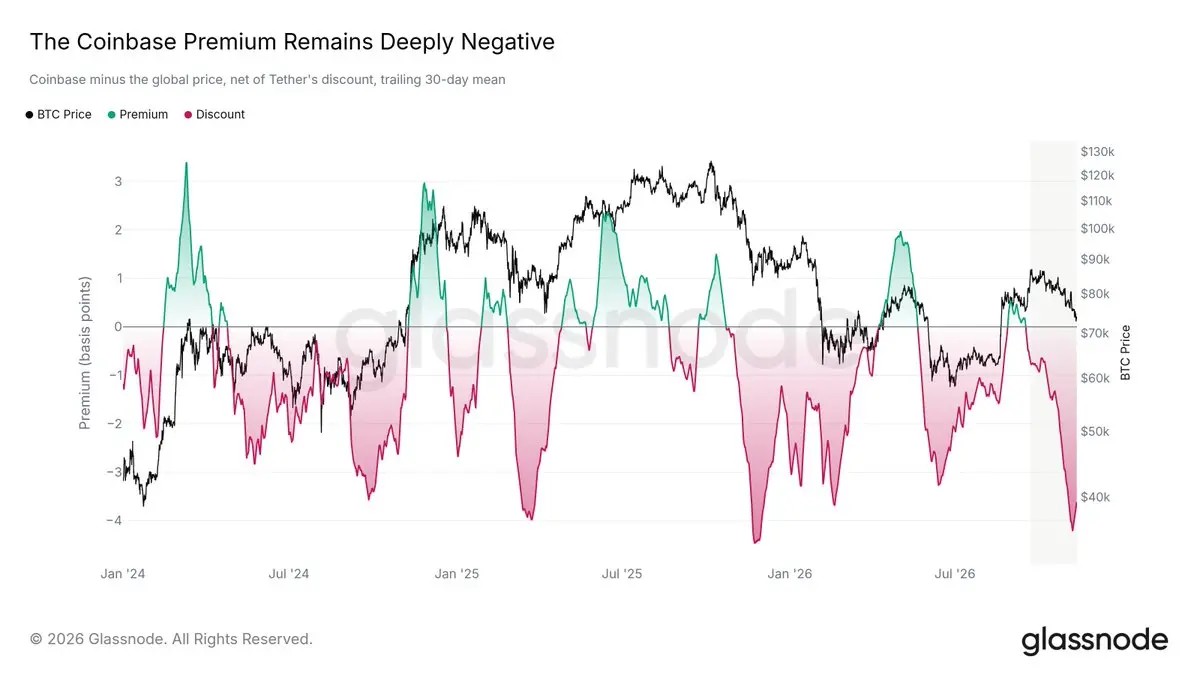
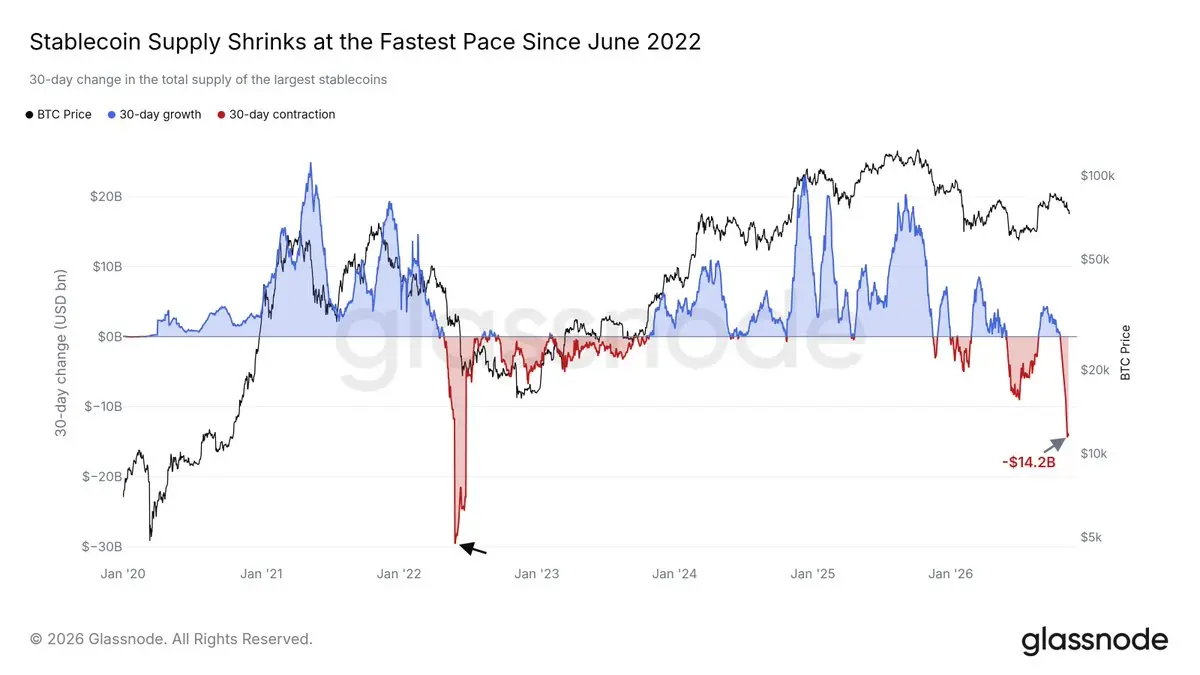
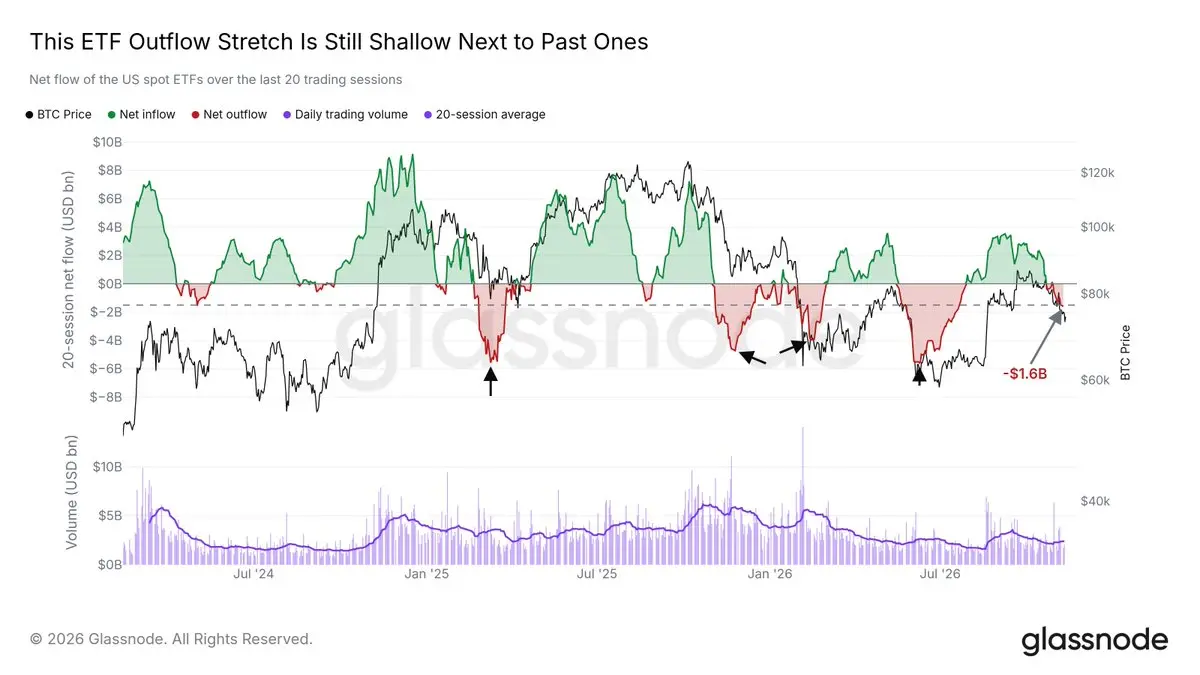
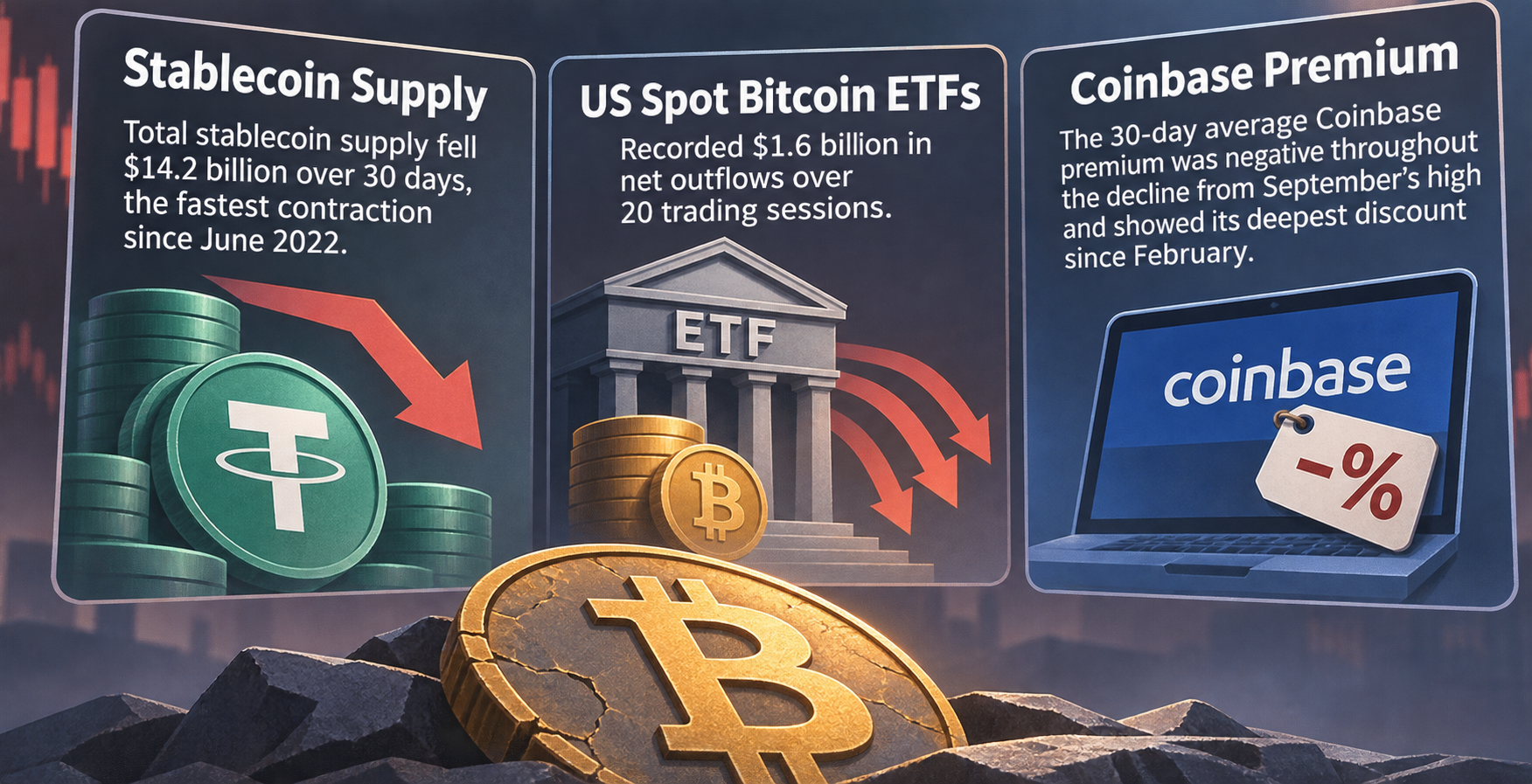
Crypto-market funding indicators were weaker. Total stablecoin supply fell $14.2 billion over 30 days—the fastest contraction since June 2022, according to Glassnode. US spot Bitcoin ETFs recorded $1.6 billion in net outflows over 20 trading sessions. Glassnode’s 30-day average Coinbase premium was negative throughout the decline from September’s high and showed its deepest discount since February, even after adjusting for Tether trading below $1.
What the positioning data did—and did not—show
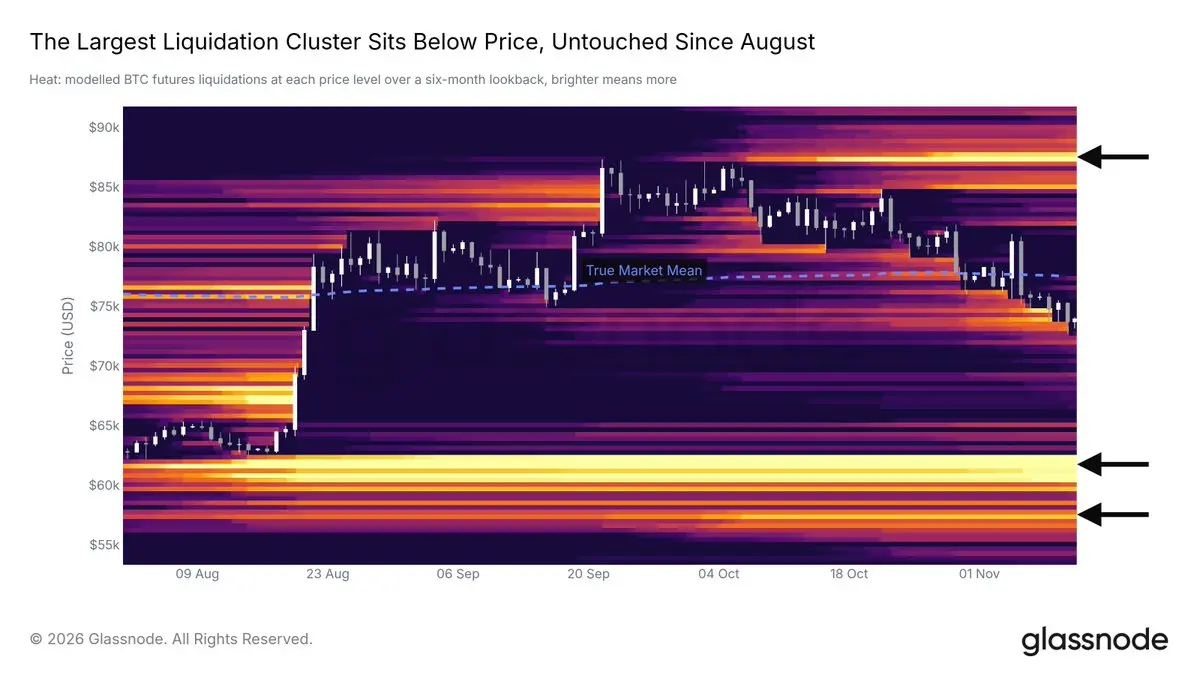
Glassnode’s liquidation heatmap suggested that the decline had already crossed most nearby long-liquidation levels. Its largest cluster below the price lay at $59,500–$62,600; the largest cluster above was near $87,500. Open interest had returned to its September-high level despite a roughly 15% price decline, which Glassnode interpreted as evidence that traders had added short positions.
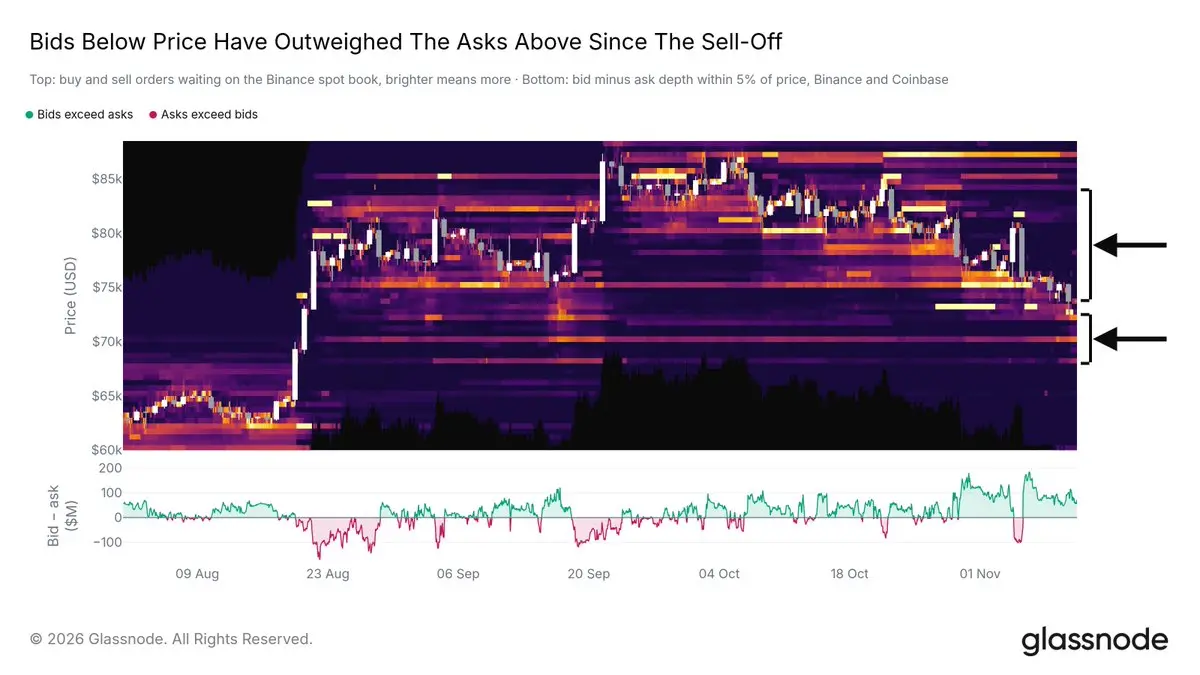
On Binance and Coinbase, buy orders within 5% of the price had exceeded sell orders every hour since the November 5 sell-off, Glassnode reported. A large buy-order block sat at $68,000–$72,500, while the order book was relatively thin above nearby sell orders to around $84,000. These were resting orders, not guaranteed support: Glassnode noted that some bids had been withdrawn during the sell-off and later reposted.
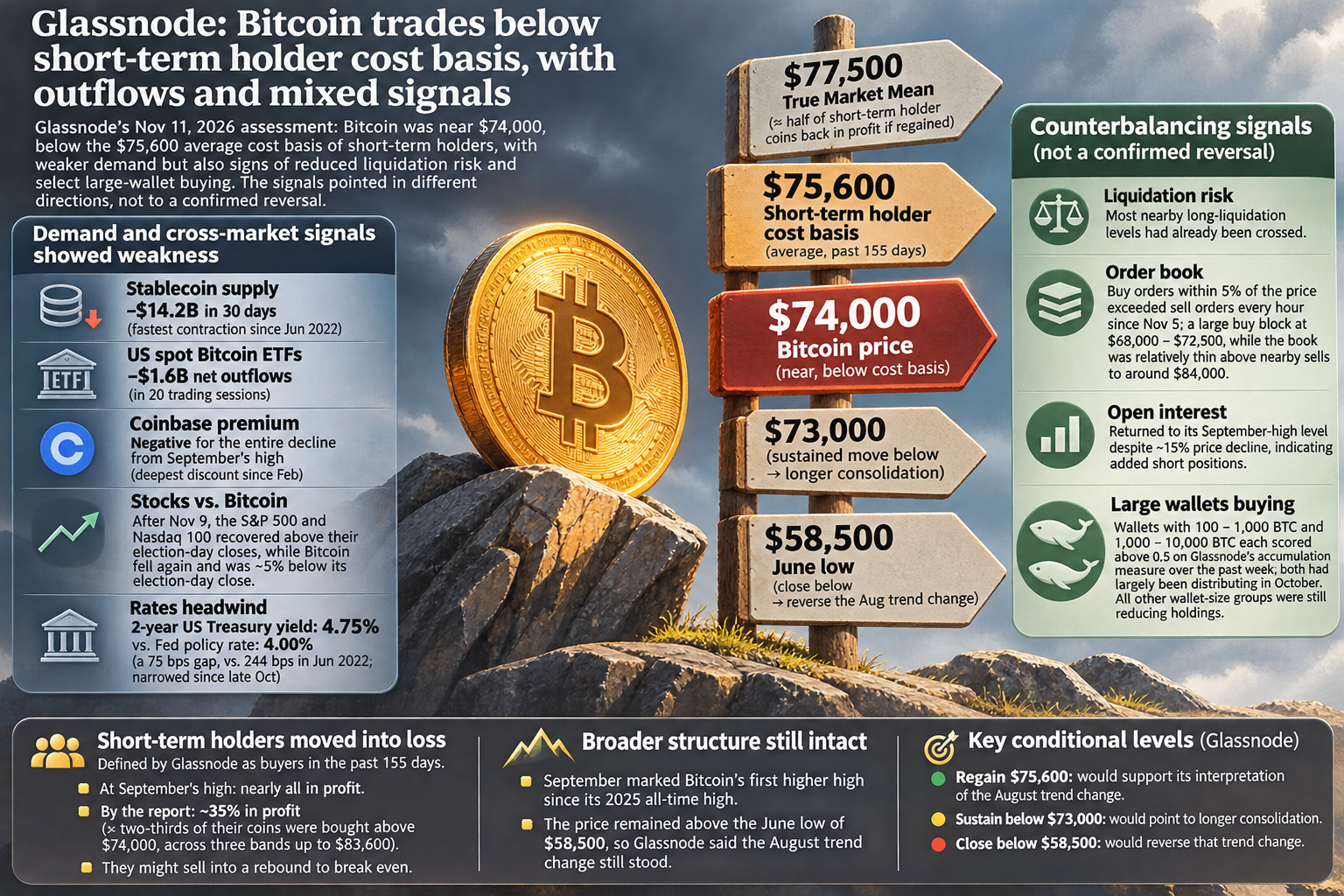
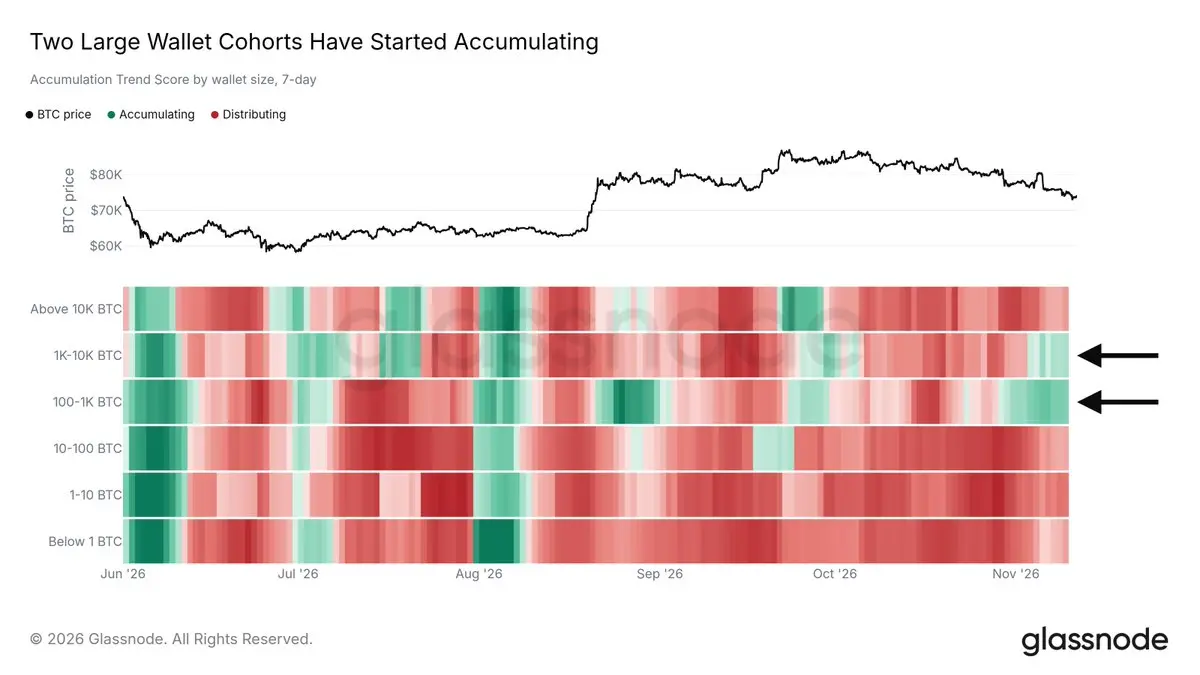
Wallet accumulation was narrow. Over the preceding week, wallets holding 100–1,000 BTC and 1,000–10,000 BTC each scored above 0.5 on Glassnode’s accumulation measure. Both groups had largely been distributing in October, and their earlier turn toward buying in late September had not lasted. Every other wallet-size group was still reducing holdings.
Glassnode identified $75,600 as a level whose recovery would support its interpretation of the August trend change. It said a sustained move below $73,000 would point to longer consolidation, while a close below June’s $58,500 low would reverse that trend change. These were conditional readings in a historical report, not subsequent outcomes.
Source: chaincatcher.com (originally published 2026-11-11 23:17 UTC+8)