Bitcoin gave back Wednesday’s post-election rebound on Thursday as a technology-stock selloff spread into cryptocurrencies and forced liquidations added to the decline.
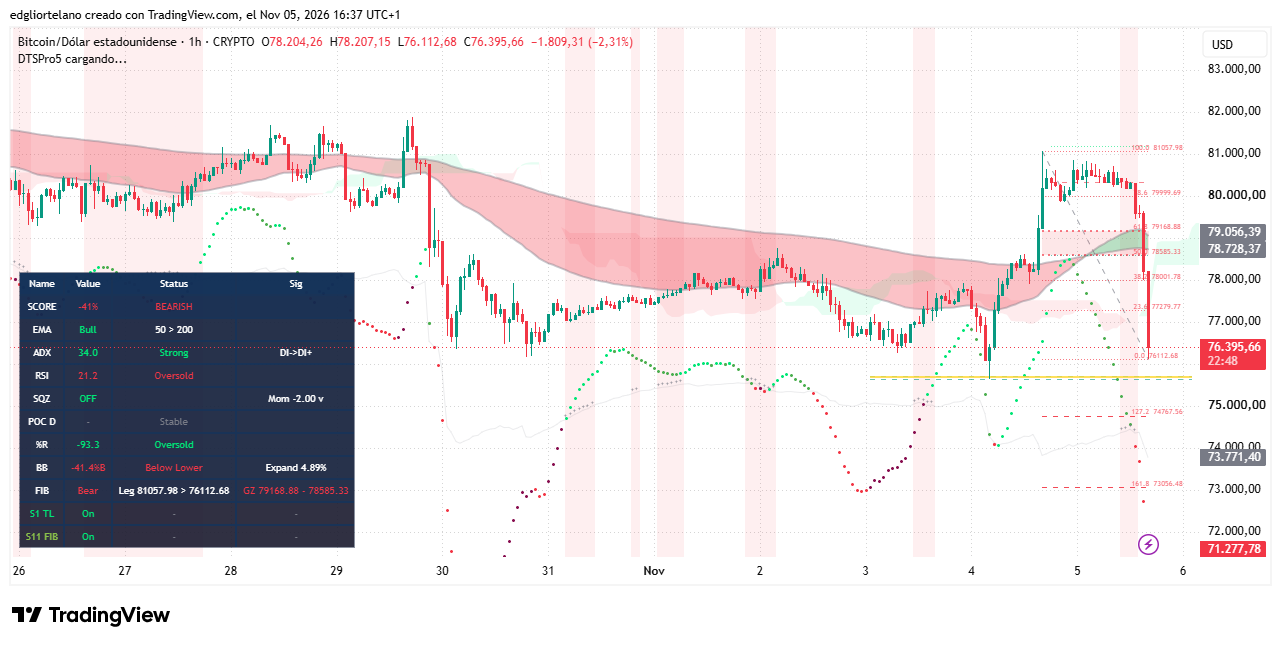
Bitcoin fell to about $76,500, down nearly 5%, and returned near levels seen before Wednesday’s jump above $80,000. Ethereum lost more than 5%. Other major tokens suffered comparable losses. Roughly 90% of the top 100 cryptocurrencies were in the red. About $428 million in crypto long positions were liquidated in one hour.
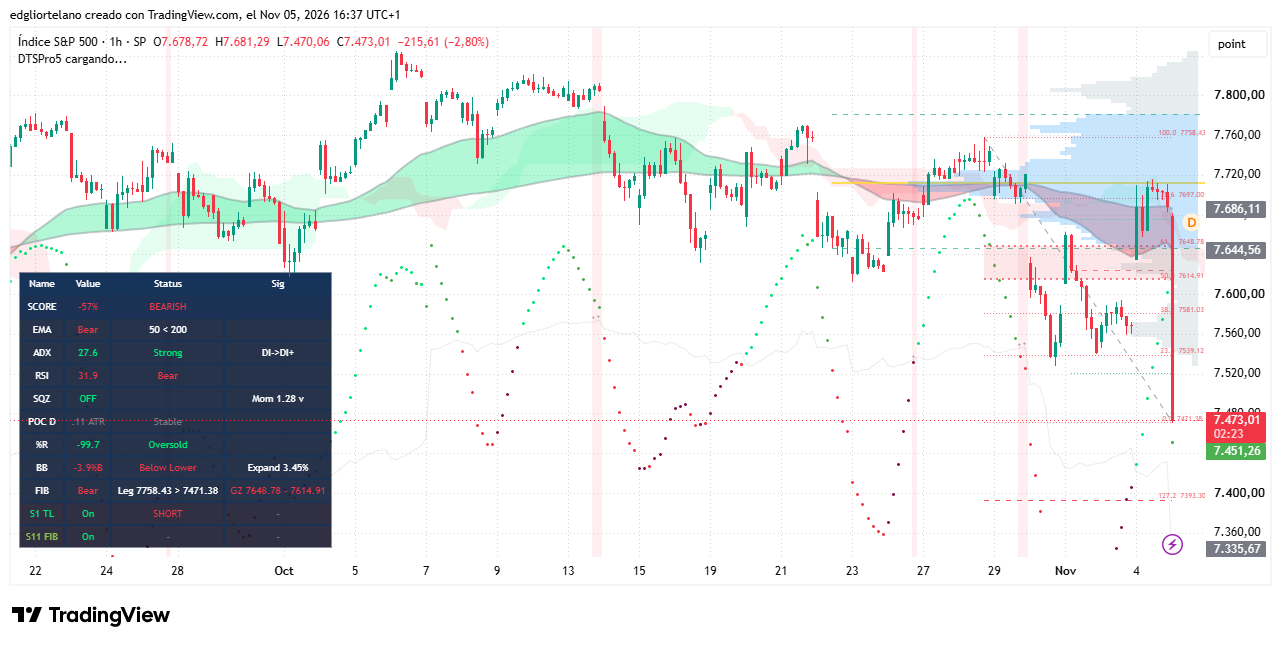
Wall Street did not cushion the move. In late-morning trading the S&P 500 was down about 2.6%. The Nasdaq sank nearly 4% and was approaching a correction, a 10% drop from its peak. The S&P 500 also had its biggest bearish intraday movement in months, dropping almost 4% in minutes.
The election was part of the backdrop. Anxiety over AI spending and interest rates made the damage worse.
Democrats’ sweep of Congress initially rattled investors who expected tougher oversight of industries favored by President Donald Trump. Stocks rallied on Wednesday as traders bet gridlock would limit major policy changes and falling oil prices would ease inflation. Bitwise Europe analyst André Dragosch told Decrypt the Democratic sweep was “largely priced in.”
Thursday brought a different reading. Investors weighed what Democratic control might mean for the data-center boom, particularly where voters oppose rising electricity costs and new facilities. Voters in at least 29 U.S. jurisdictions backed restrictions on data-center development, although not every measure is binding. UBS estimates, reported by Reuters, that potential pauses could threaten 30% of planned U.S. data-center capacity additions in 2028.
“We suspect there is going to be some scrutiny on this aggressive AI buildout,” Swissquote senior analyst Ipek Ozkardeskaya told Reuters.
Chipmakers and AI infrastructure companies were hit first. The Philadelphia Semiconductor Index dropped about 8%. CoreWeave and Nebius fell by double digits. Tesla tumbled roughly 9.5%, extending losses after Elon Musk spent heavily backing Republican candidates. Ted Parkhill, chief executive of Incline Investment Management, told Reuters: “The market’s moving from the promise of AI to the price of AI.”
The political shift also complicates crypto’s ambitions in Washington. Democratic control makes it harder to revive the stalled Clarity Act, a proposed federal rulebook for digital assets. The new Congress will not take office until January. That legislative calendar is separate from the speed of the price move. Politics alone cannot explain Bitcoin losing thousands of dollars in an hour.
Leverage accounts for more of the reversal than a straight change in demand.
Wednesday’s rally looked dramatic, but much of the buying pressure came from traders closing losing bets against Bitcoin. CoinGlass data showed about $378 million in short positions liquidated in one hour as Bitcoin pushed above $80,000. Thursday flipped that machinery. Exchanges automatically closed underfunded longs as prices fell, generating more selling and the steep red candles on Bitcoin’s hourly chart.
The two sessions followed one another. They were not the same kind of move. Wednesday was amplified by short covering, which is not the same as fresh demand. Thursday was amplified by long liquidations, which is not the same as an orderly exit. The sequence does not establish a cycle top or bottom.
Crypto was already vulnerable before the election. The market had lost roughly $300 billion in value over the previous month amid concerns about AI spending, rising borrowing costs, and the fallout from the prior week’s multibillion-dollar Binance hack. Traders also expected another Federal Reserve rate increase in December as inflation persisted. Friday’s October jobs report could alter those bets. Higher rates generally hurt demand for speculative investments.
Technically, Bitcoin’s still-forming daily candle threatened a bearish engulfing pattern that could swallow Wednesday’s green body and erase the breakout in a single session. The hourly chart showed selling through $79,000 to near $76,100. The next test noted in the reporting was $75,000, while reclaiming $80,000 could ease the pressure. Thursday’s candle had not closed, so the pattern remained unconfirmed.
This account follows reporting by Decrypt, published November 6, 2026, at 00:29 (UTC+8).