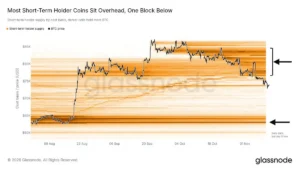
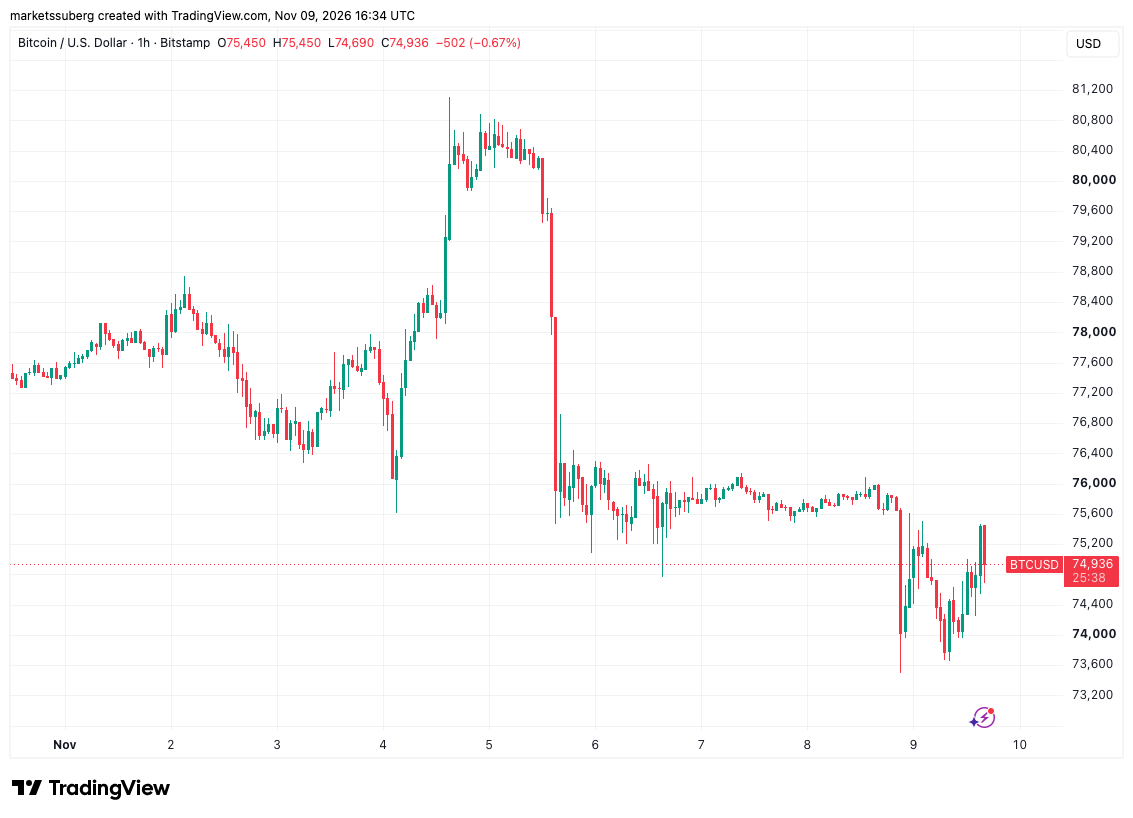
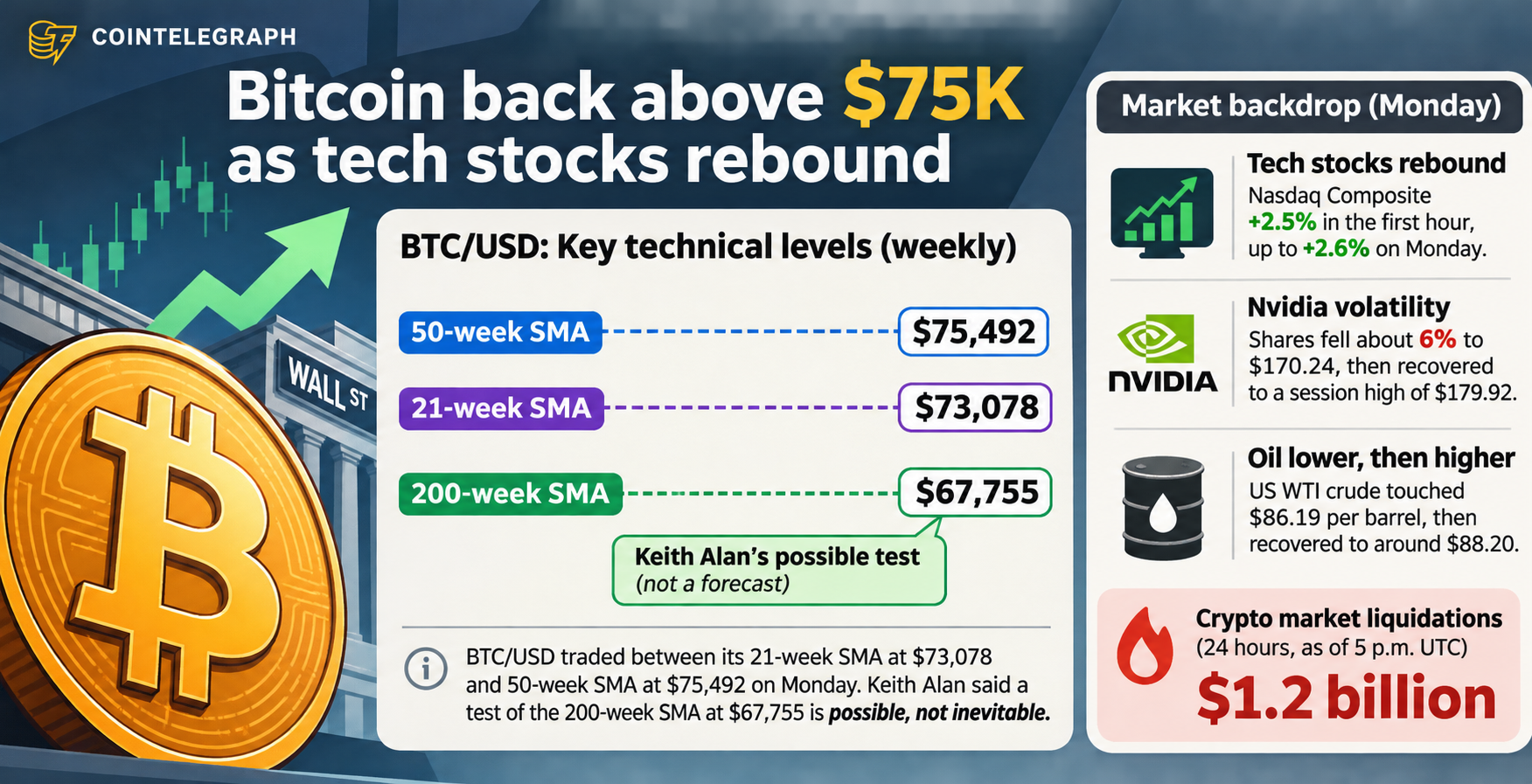
Bitcoin returned above $75,000 after Wall Street opened on Monday, November 9, 2026, rebounding from a Sunday low of $73,500—its lowest level since August 21. TradingView data cited by Cointelegraph showed BTC/USD up 0.8%. The recovery came alongside a rebound in technology stocks, but the timing alone does not establish what drove Bitcoin’s move.
Tech stocks and oil
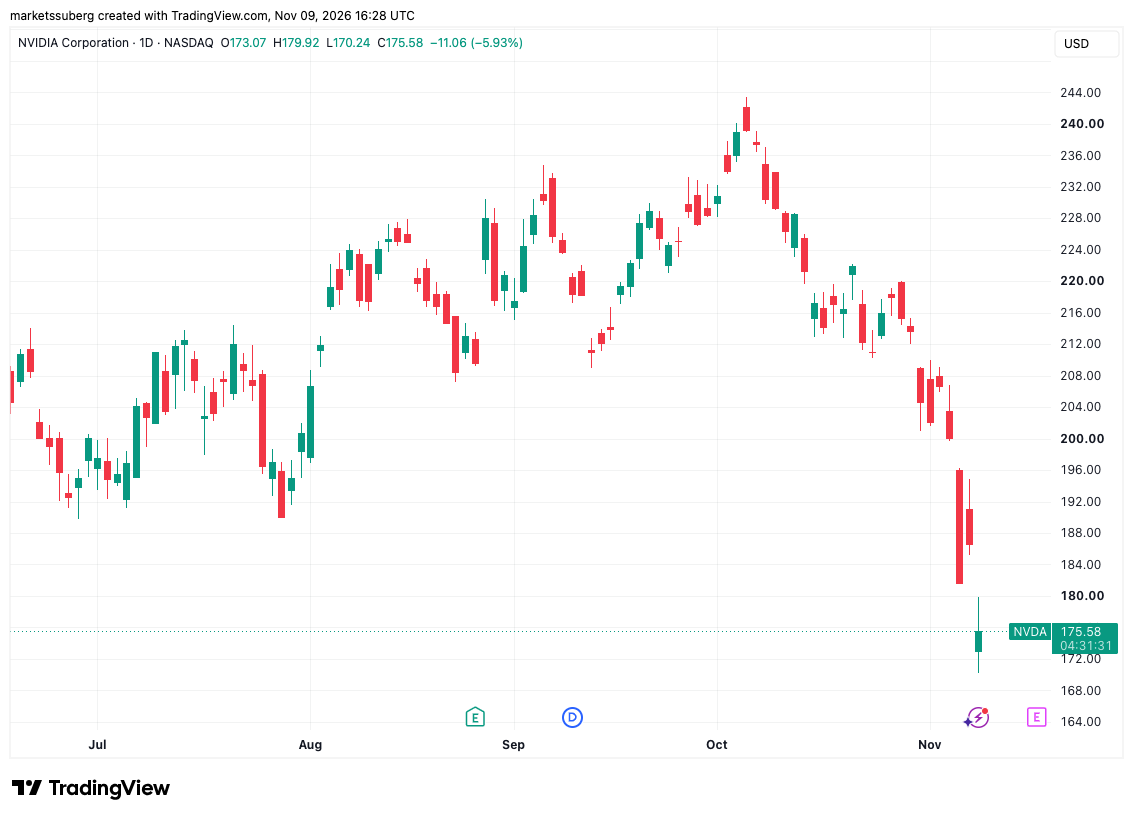
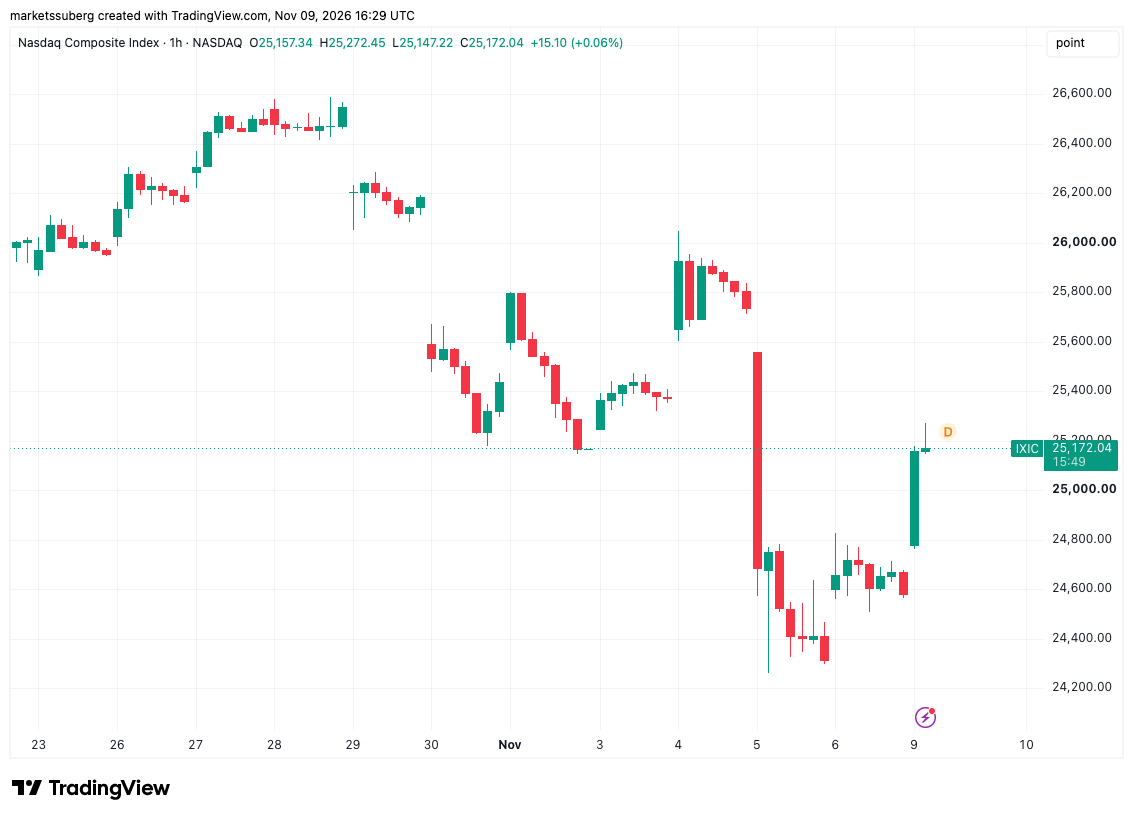
Nvidia shares initially fell about 6% to $170.24 after reports that CEO Jensen Huang may have been the target of a Chinese intelligence effort. Beijing denied the claim. The stock later reached a session high of $179.92, while the Nasdaq Composite gained 2.5% in the first hour of US trading and as much as 2.6% on Monday.
In a Sunday note quoted by CNBC, Yorkville Ives & Co.’s Dan Ives warned that the episode could weigh on Nvidia shares and prompt congressional inquiries. Former US Securities and Exchange Commission chair Gary Gensler said the company’s board would face “tough choices” depending on its internal investigation.
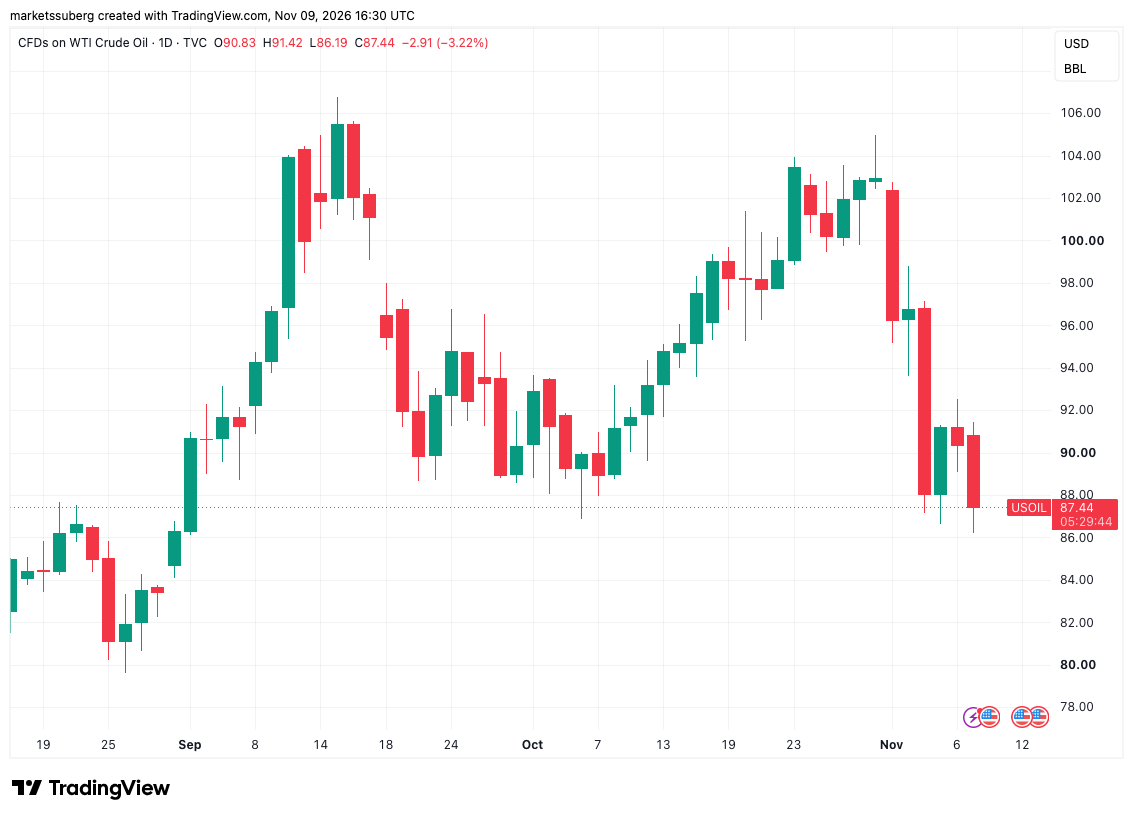
Oil also fell: US WTI crude touched $86.19 per barrel, its lowest since September 1, before recovering to around $88.20. Economist Robin Brooks pointed to a negative correlation between oil and gold, Bitcoin and the S&P 500 following September’s attack on Saudi Arabia’s East-West Pipeline. He argued that lower oil prices could lift those assets, while acknowledging that the correlations might fade.
The levels under watch
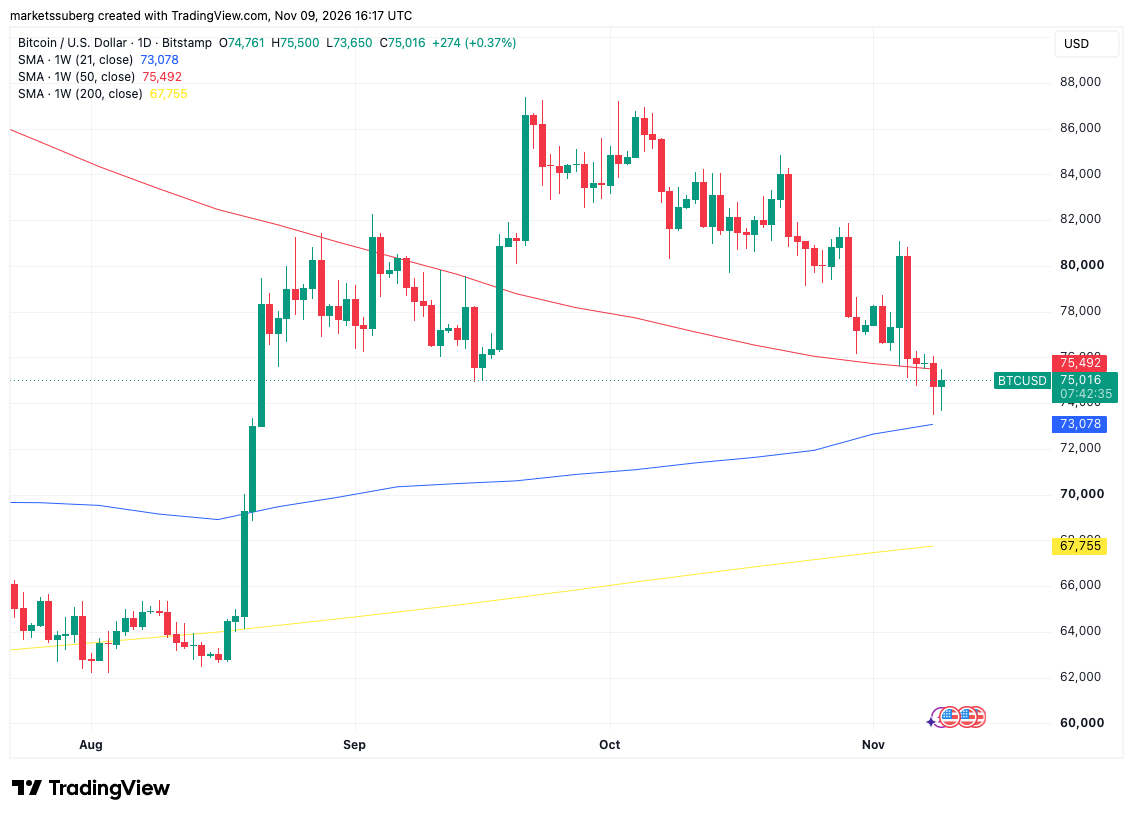
On Monday, BTC/USD traded between its 21-week simple moving average at $73,078 and its 50-week average at $75,492. Keith Alan, cofounder of Material Indicators, identified a possible, not inevitable, test of the 200-week average at $67,755. He said thin order books and the broader market structure left room for lower prices before a breakout could be validated, although the weekly picture was beginning to look more bullish.
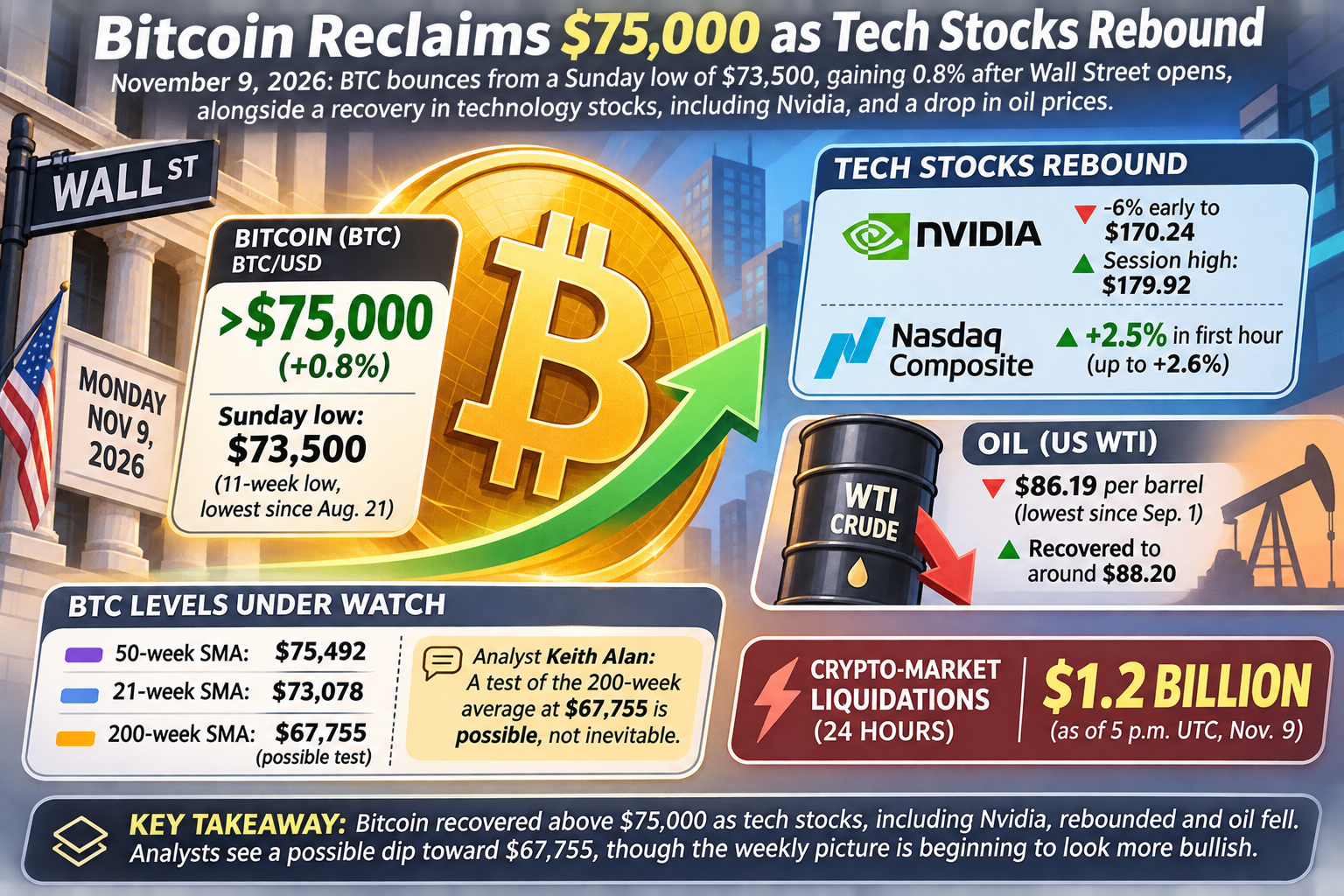

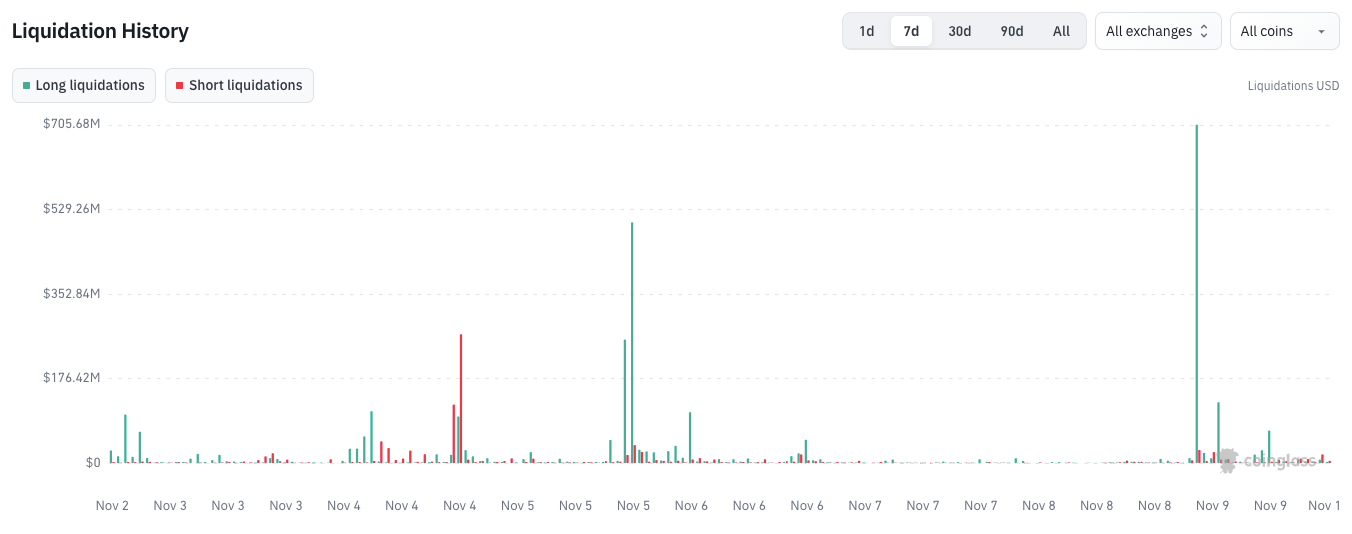
CoinGlass put 24-hour crypto-market liquidations at $1.2 billion as of 5 p.m. UTC on Monday.
Source: cointelegraph.com (originally published 2026-11-10 01:13 UTC+8)