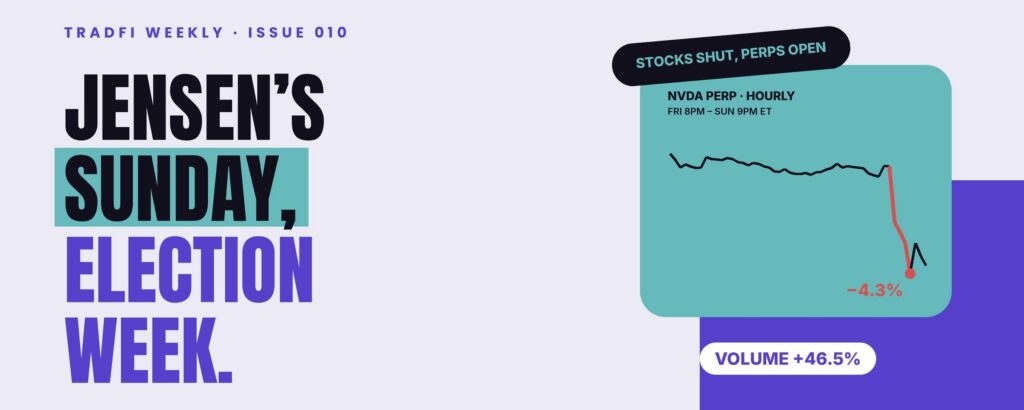
Originally reported November 11, 2026, at 19:37 UTC+8. In its review of November 2–8 trading, TokenInsight reported that an NVDA perpetual contract on OKX fell 4.3% over four hours on Sunday, November 8, while US stock markets were closed. The move illustrates how around-the-clock crypto-listed contracts can react to news before the corresponding shares resume trading—but it does not establish what caused every trade.
The weekend NVDA move
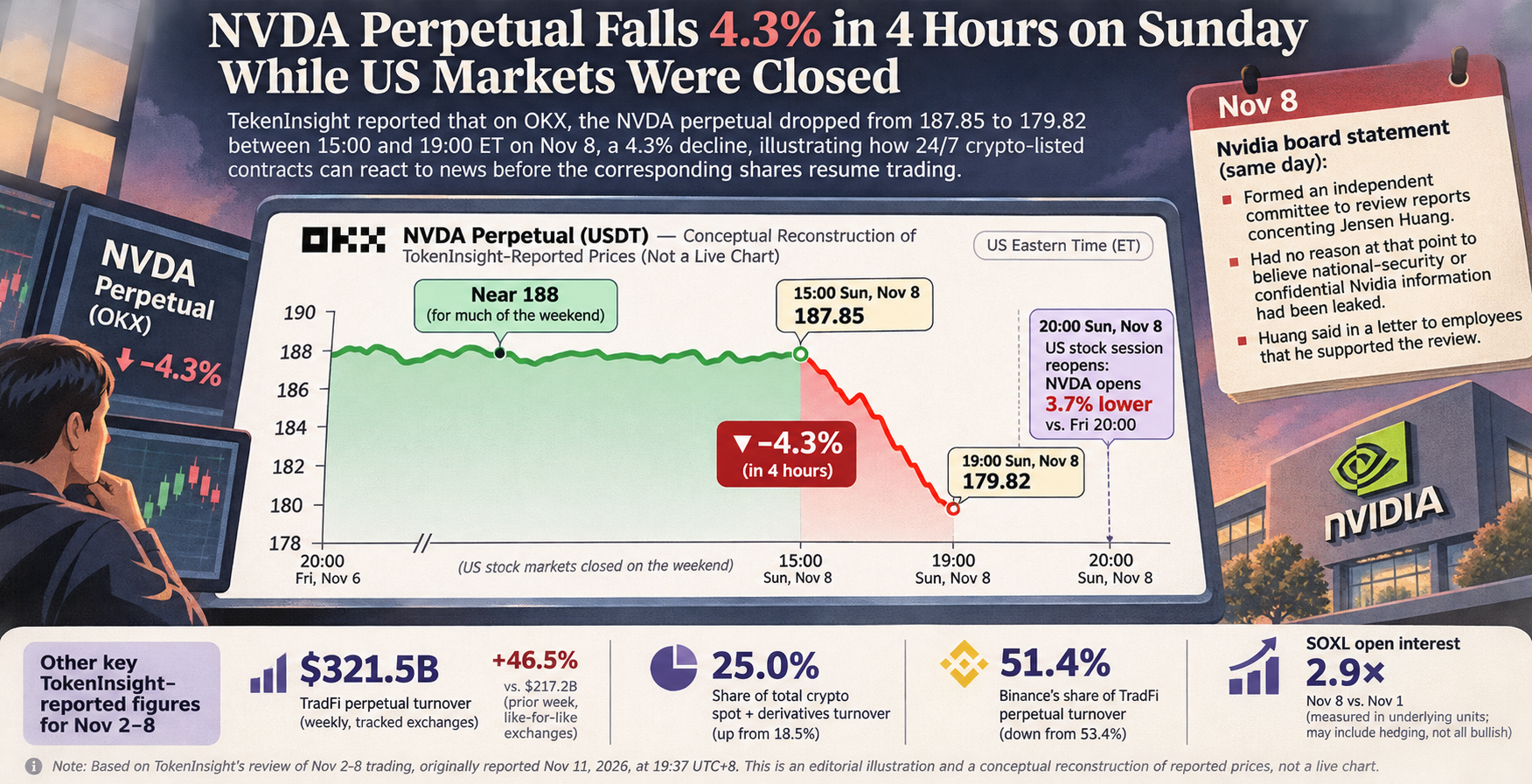
According to TokenInsight, the OKX contract traded near 188 for much of the weekend. From 15:00 to 19:00 US Eastern time on Sunday, it fell from 187.85 to 179.82. Turnover in the 15:00 hour reached $9.15 million, 26 times the previous hour’s level.
That day, Nvidia’s board said it had formed an independent committee to review reports concerning Jensen Huang. The board said it had no reason at that point to believe national-security or confidential Nvidia information had been leaked; Huang said in a letter to employees that he supported the review. These statements do not substantiate rumors circulating online.
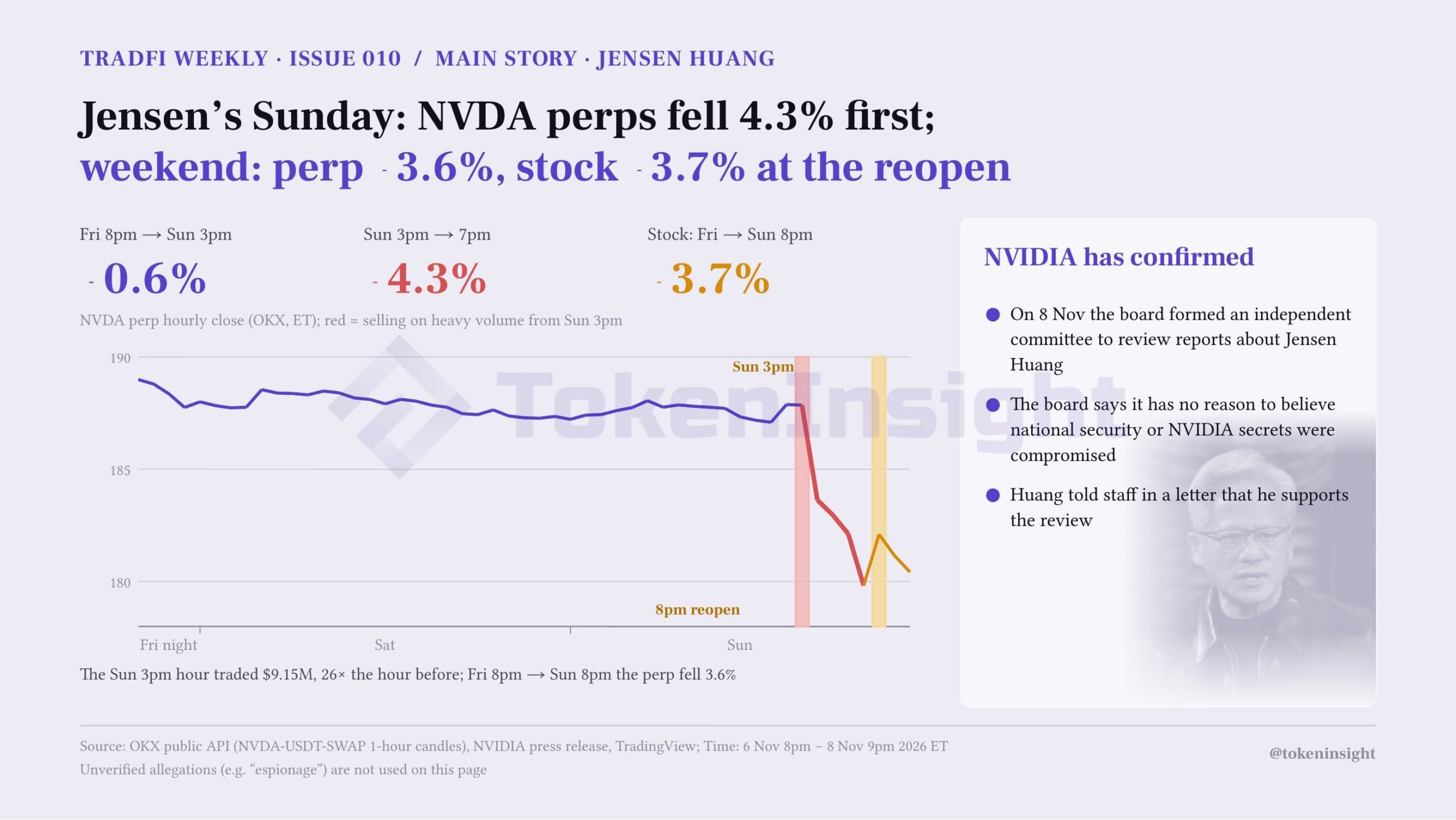
When the stock’s Sunday evening session opened at 20:00 Eastern, its opening price was 3.7% below its Friday 20:00 level. Over the same Friday-to-Sunday window, the perpetual had fallen 3.6%, TokenInsight reported. The two moves were close, although that comparison alone does not prove the perpetual predicted the stock’s opening price.
A volatile week, and a larger market for the contracts
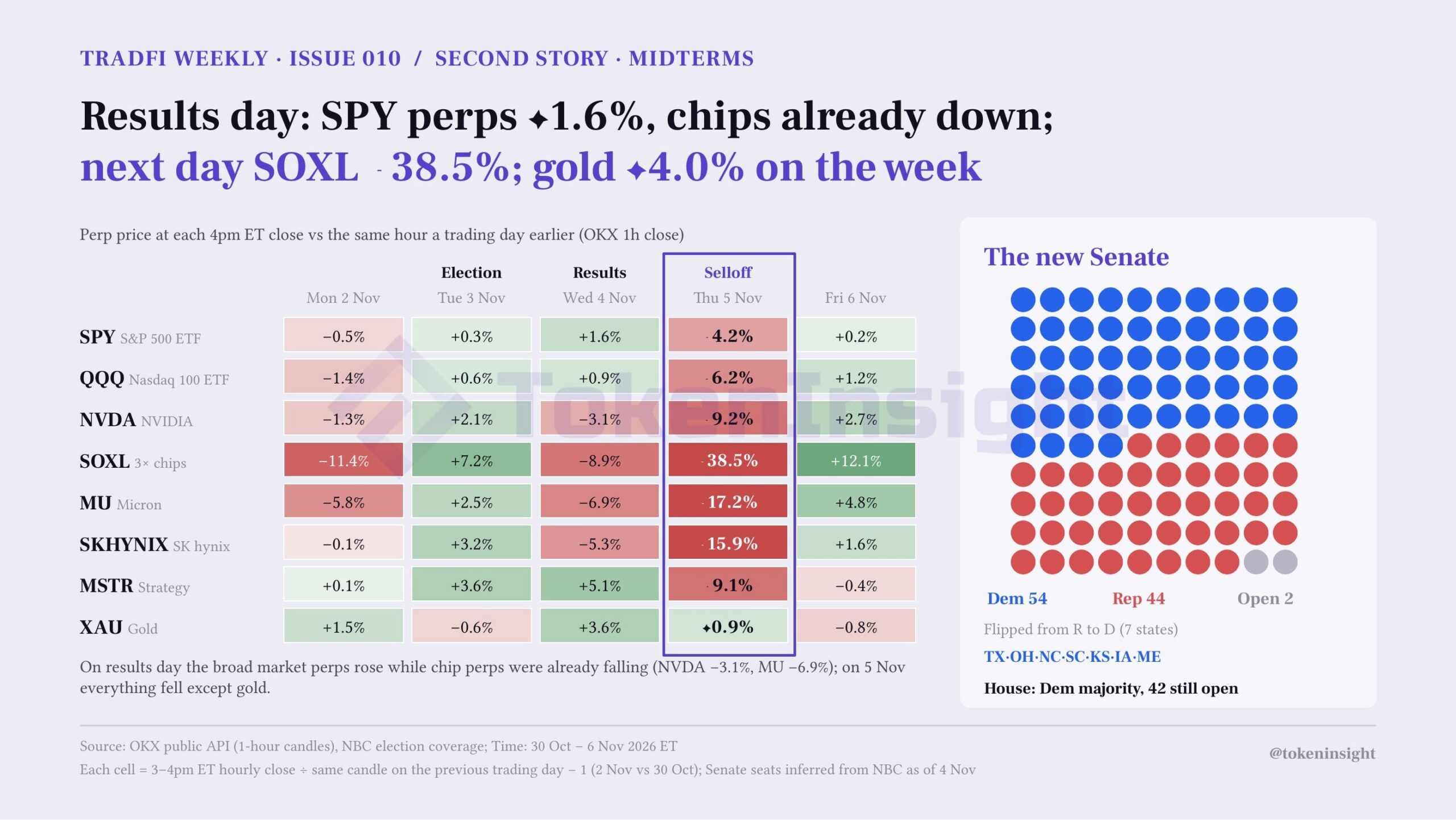
TokenInsight placed the weekend move alongside US midterm-election results and a chip-stock sell-off. Citing NBC’s November 4 count, it reported Democrats holding 54 Senate seats to Republicans’ 44, with two undecided, and a Democratic House majority with 42 seats still to be decided. On November 5, the Philadelphia Semiconductor Index fell 12.25%, its worst single-day performance since March 2020, according to the report.
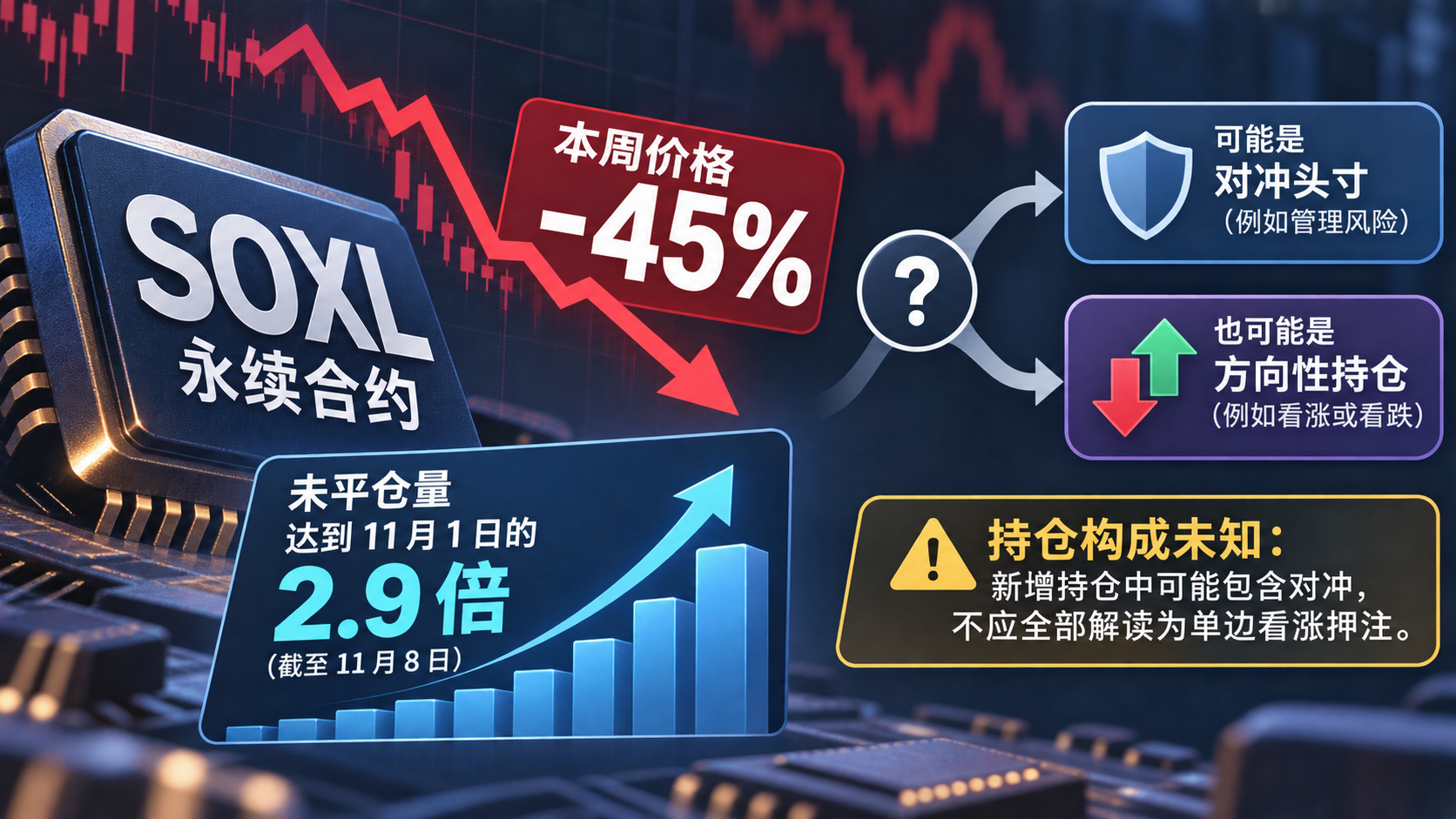
In TokenInsight’s daily comparisons at the 16:00 Eastern stock-market close, the SPY perpetual rose 1.6% on November 4 while NVDA fell 3.1% and Micron fell 6.9%. The following day, QQQ fell 6.2%, NVDA 9.2%, SK Hynix 15.9% and the leveraged semiconductor ETF SOXL 38.5%. SOXL rebounded 12.1% on November 6, but its perpetual was down 45% over the week. Gold perpetuals rose 4.0% for the week; oil fell 11.8% and Nikkei 225 fell 7.8%.
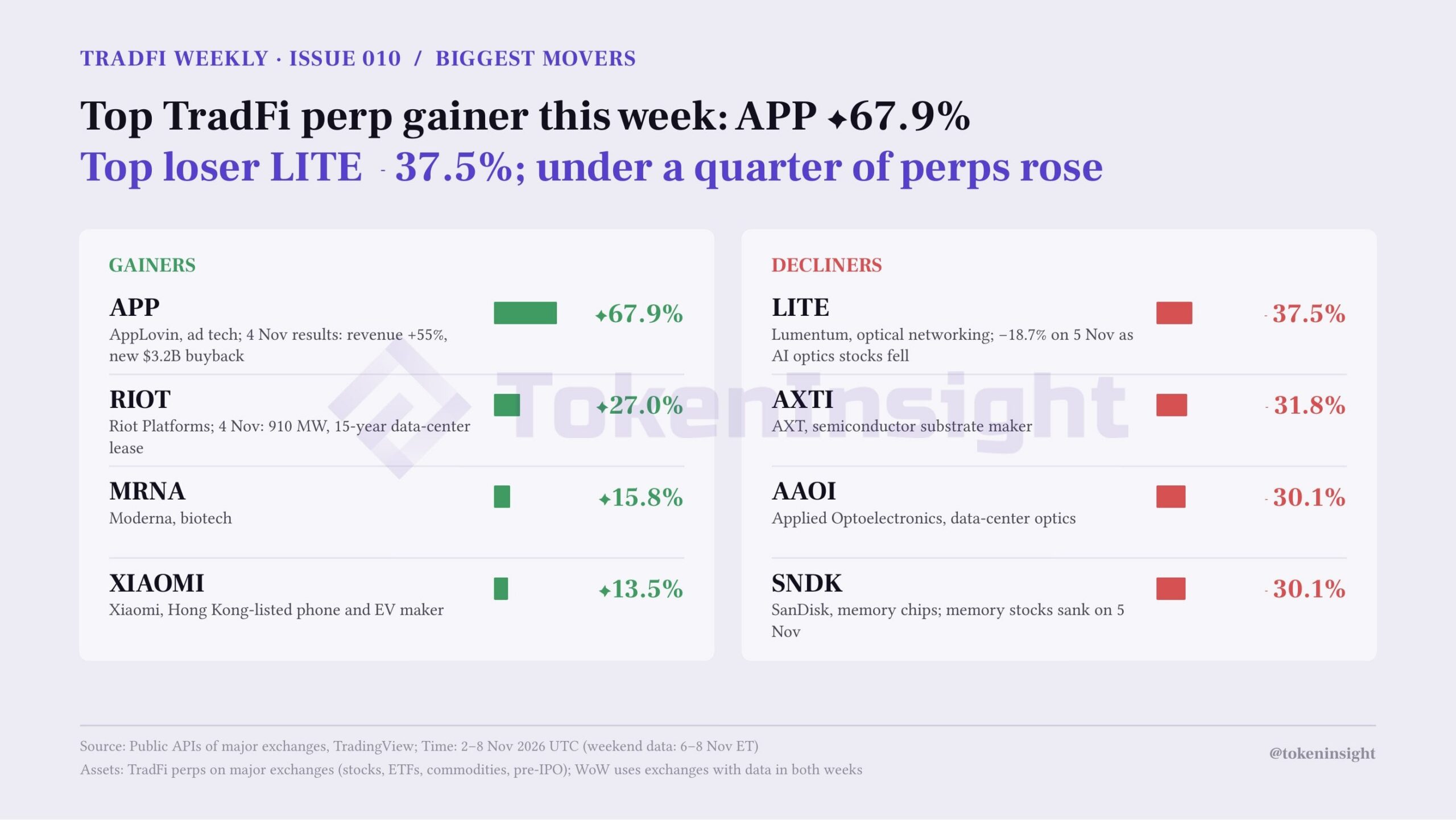
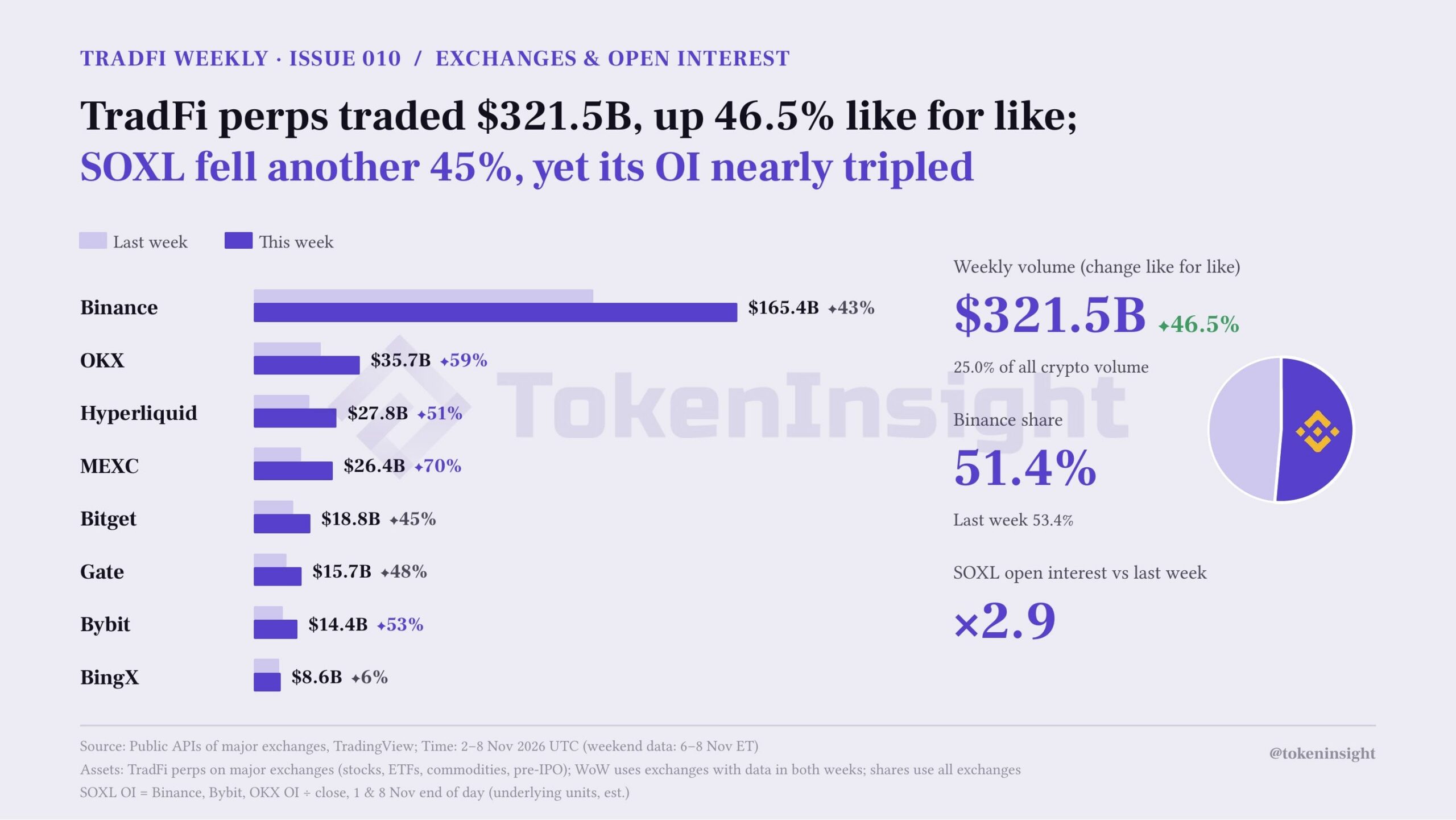
Across the exchanges TokenInsight tracked, weekly TradFi perpetual turnover reached $321.5 billion. On a like-for-like set of exchanges covered in both weeks, it rose from $217.2 billion to $318.1 billion, a 46.5% increase. November 5 accounted for $90.7 billion. These contracts represented 25.0% of the report’s combined crypto-platform spot and derivatives turnover, up from 18.5% the prior week. Binance held a 51.4% share of the full-sample TradFi perpetual market, down from 53.4%.
TokenInsight estimated that SOXL open interest, measured in underlying units using end-of-day data from Binance, Bybit and OKX, reached 2.9 times its November 1 level by November 8. That does not mean all new positions were bullish: some may have been hedges.
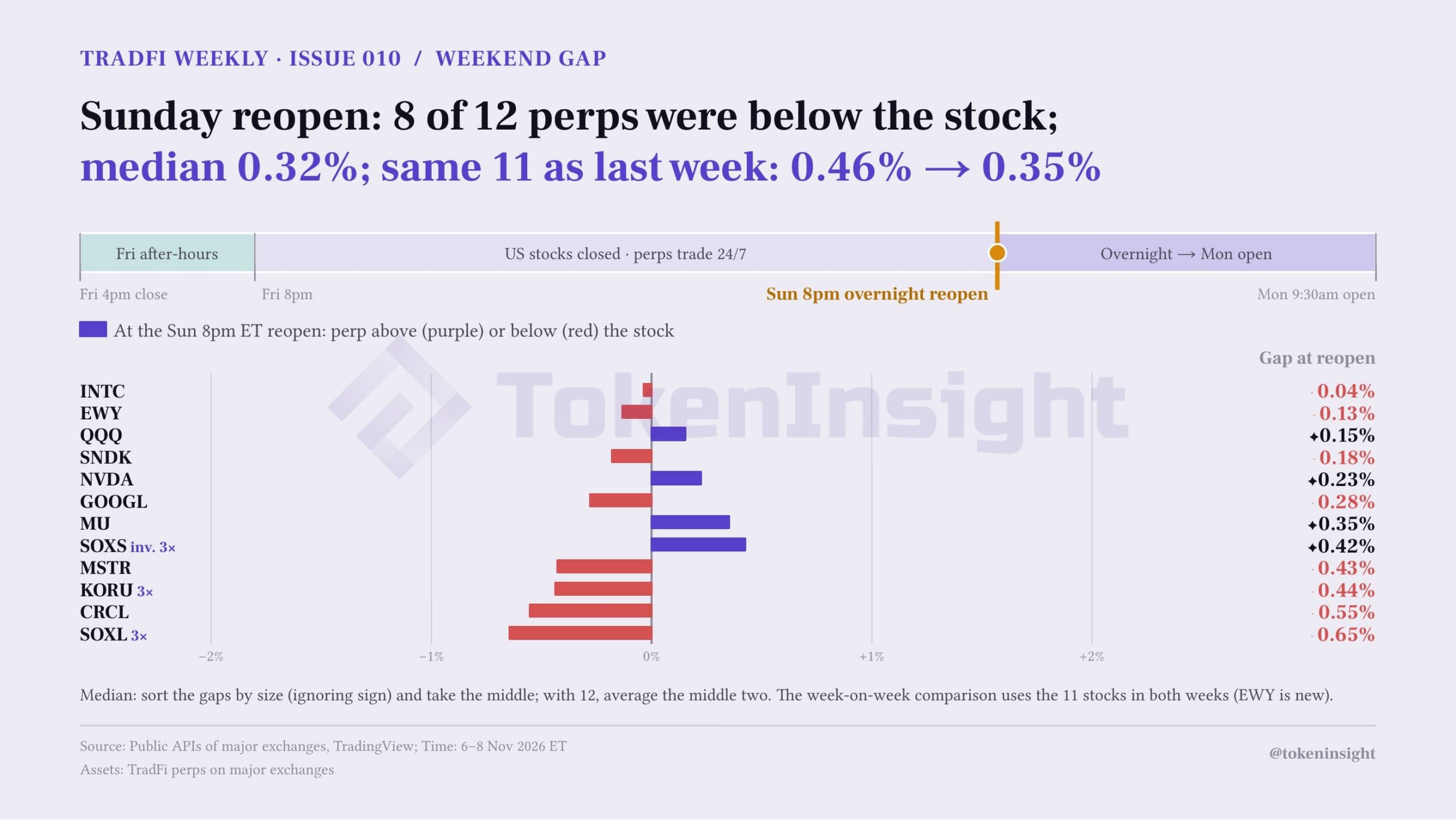
The weekend price comparison also had limits. Among 12 stocks and ETFs in TokenInsight’s Sunday-evening sample, eight perpetuals were priced below their corresponding shares when the stock session reopened. The median absolute gap was 0.32%. For the 11 instruments included in both weekly samples, the median narrowed from 0.46% to 0.35%. The NVDA match was one observation within that broader set, not a guarantee that perpetual and stock prices always converge so closely.
Source: techflowpost.com (originally published 2026-11-11 19:37 UTC+8)