Originally reported November 11, 2026, at 00:25 UTC+8 (November 10 at 16:25 UTC).
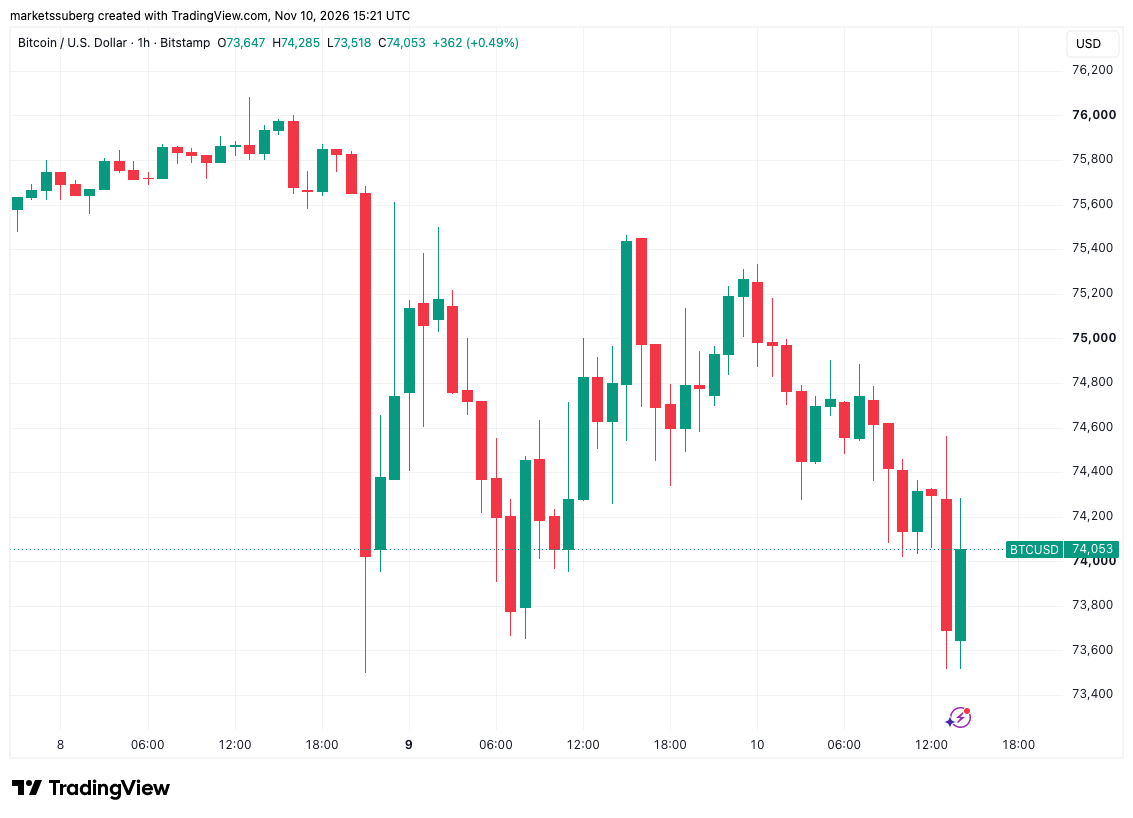
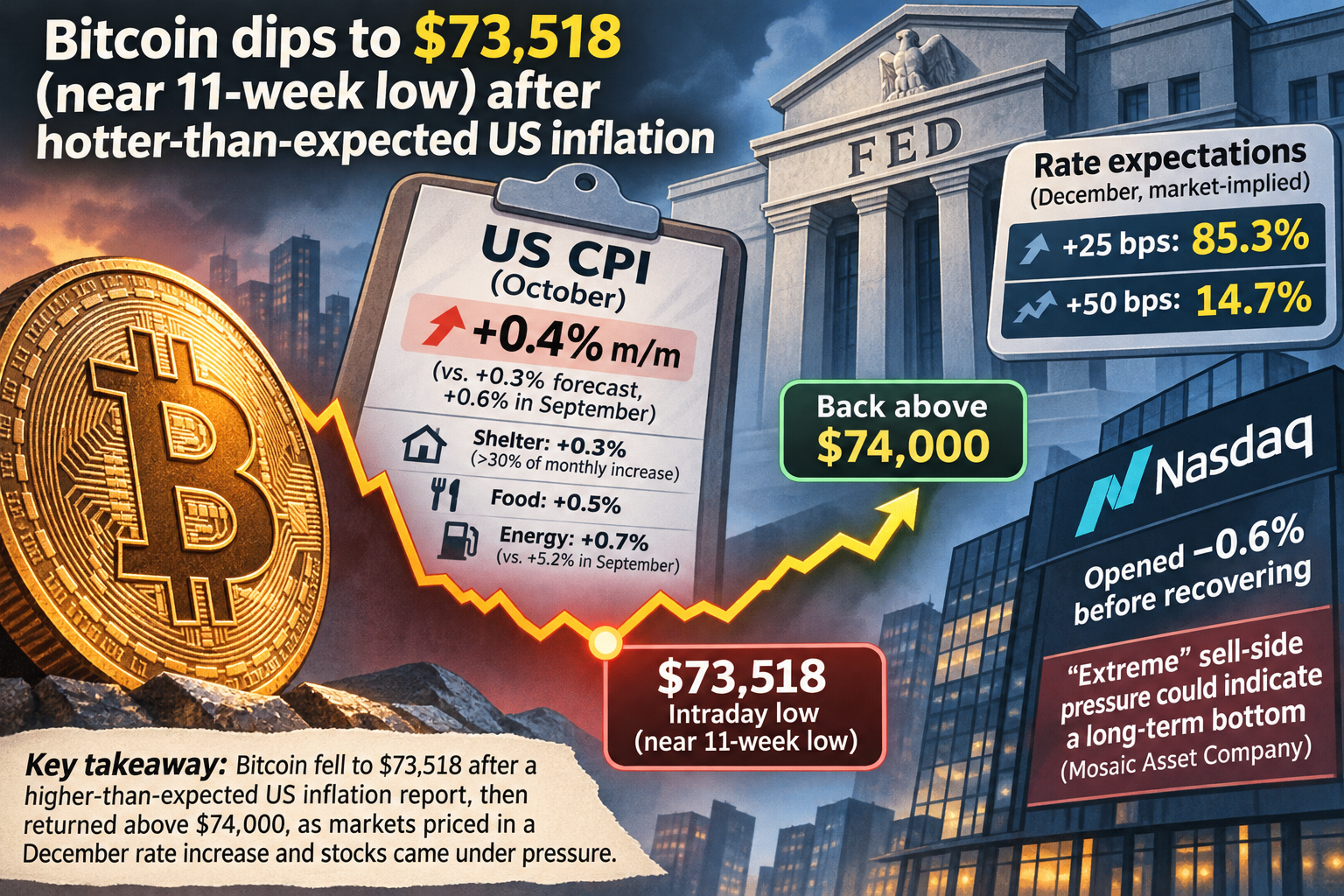
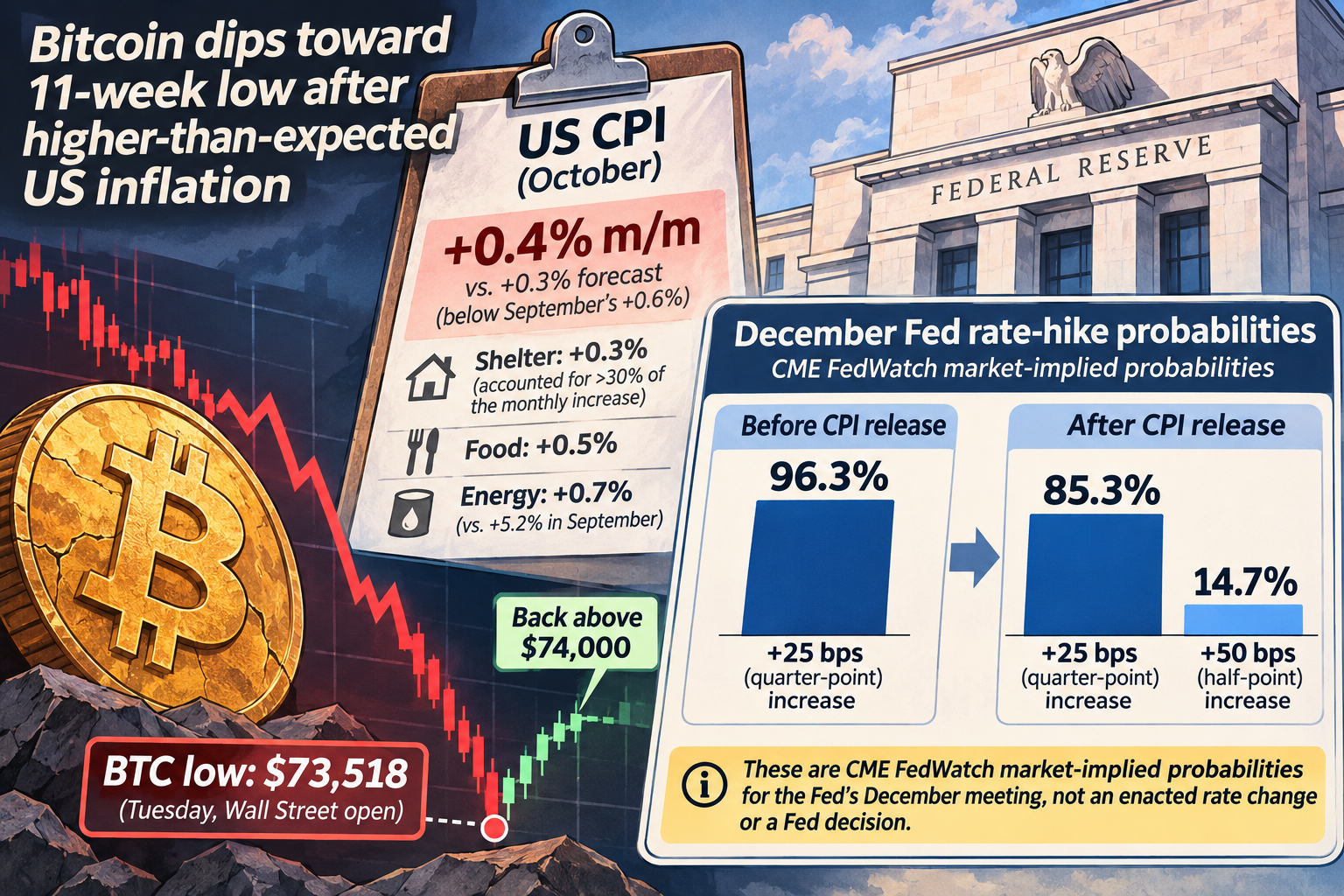
Bitcoin fell to $73,518 around Tuesday’s Wall Street open, nearly matching Sunday’s low—its weakest level since August 21—before returning above $74,000, according to TradingView data cited by Cointelegraph. The move followed a US inflation report that exceeded forecasts, though the timing alone does not establish how much the report drove Bitcoin’s decline.
Inflation cooled, but less than expected
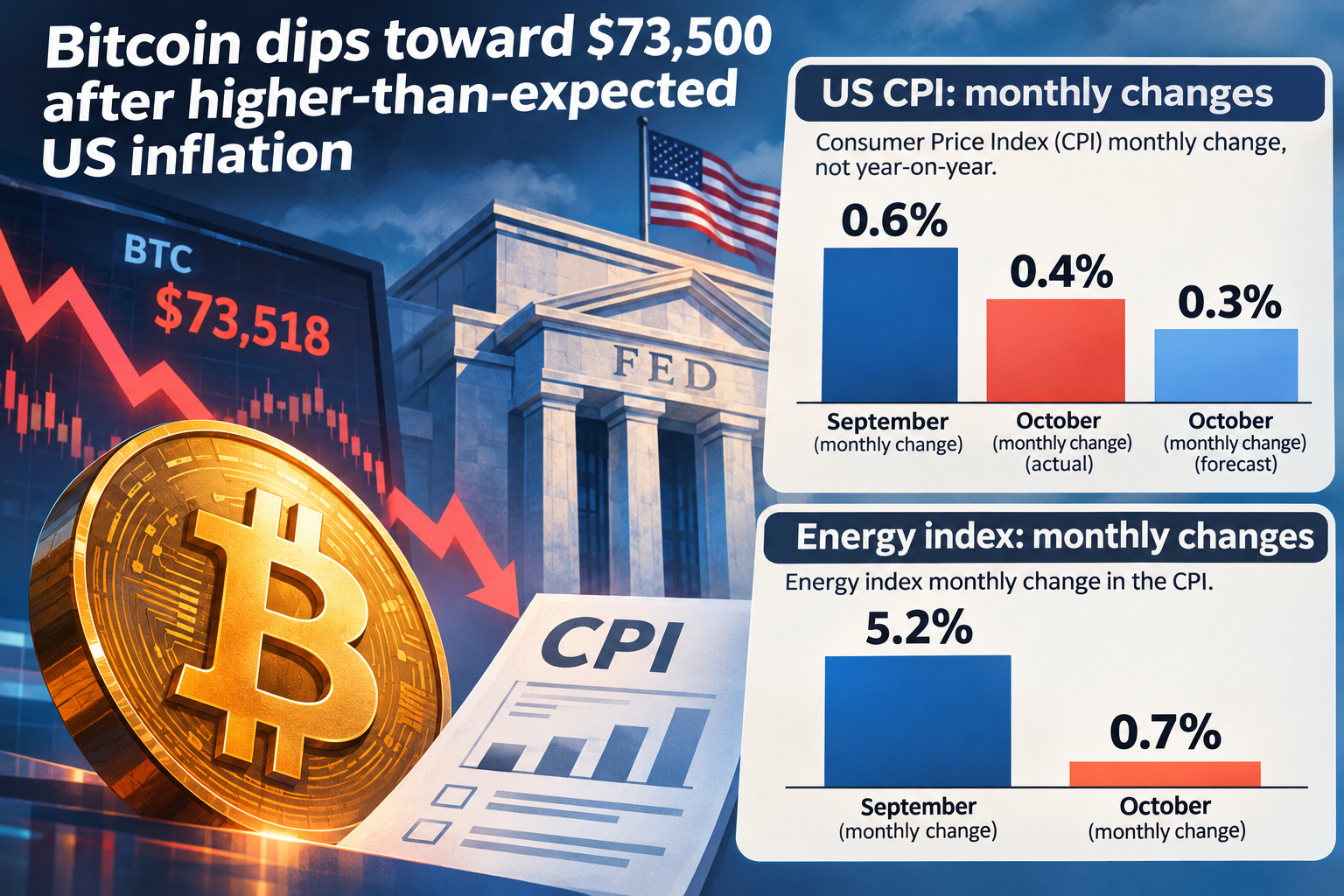
October’s Consumer Price Index rose 0.4% month on month, above the 0.3% forecast but below September’s 0.6% increase. The Bureau of Labor Statistics said shelter prices rose 0.3% and accounted for more than 30% of the monthly increase in the overall index. Food prices rose 0.5%, while the energy index increased 0.7%, compared with 5.2% in September. The report did not include a year-on-year comparison because data collection was absent during the 2025 US government shutdown.
Economist Robin Brooks called the details “discouraging” and said October’s oil-price shock could feed into core inflation.
Rate expectations and stocks
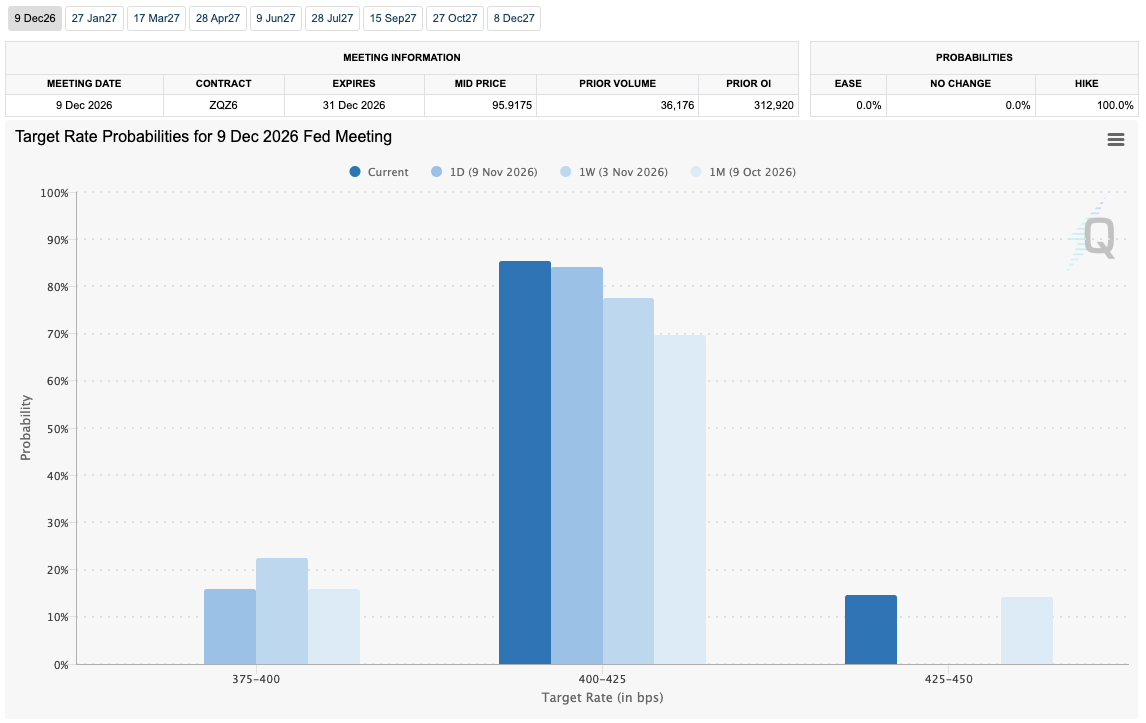
Earlier Tuesday, Federal Reserve governor Christopher Waller said he favored a 25-basis-point rate increase in December even if inflation cooled from September. CME Group’s FedWatch Tool had shown a 96.3% probability of a quarter-point increase. After the CPI release, the reported probabilities were 85.3% for a quarter-point increase and 14.7% for a half-point increase. Those were market-implied odds, not a Fed decision.
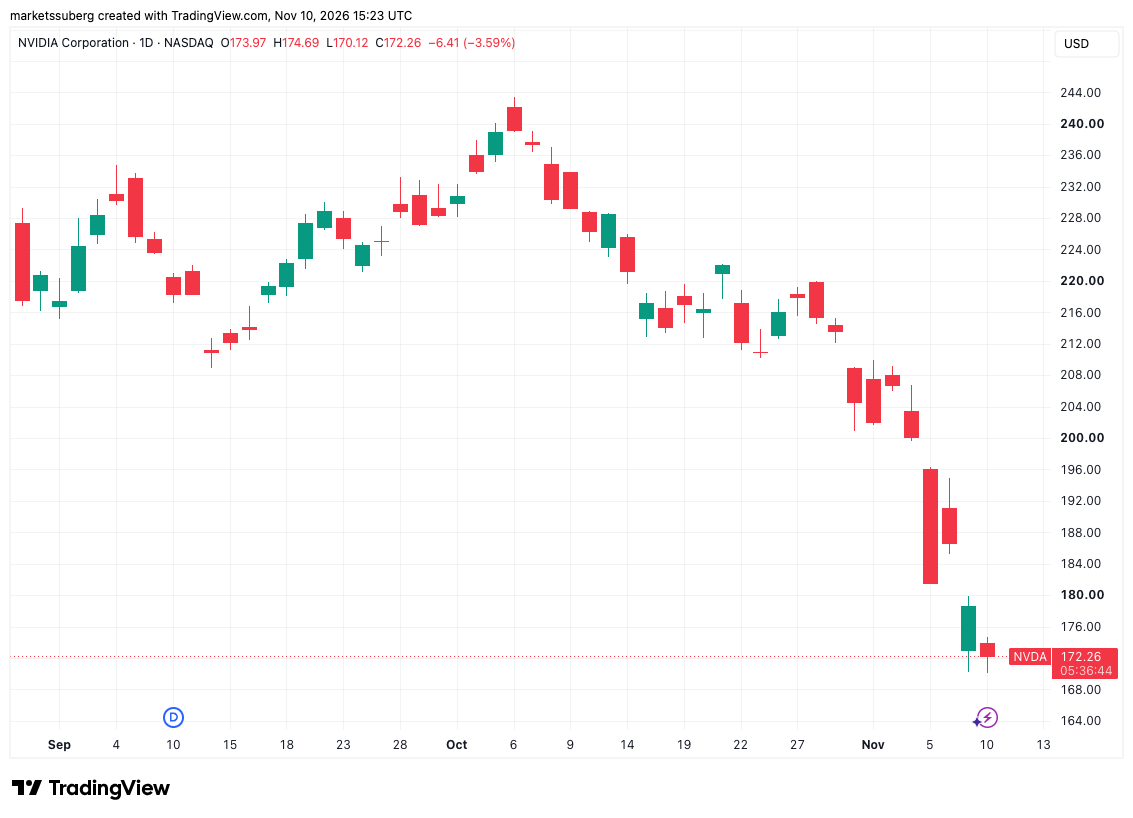
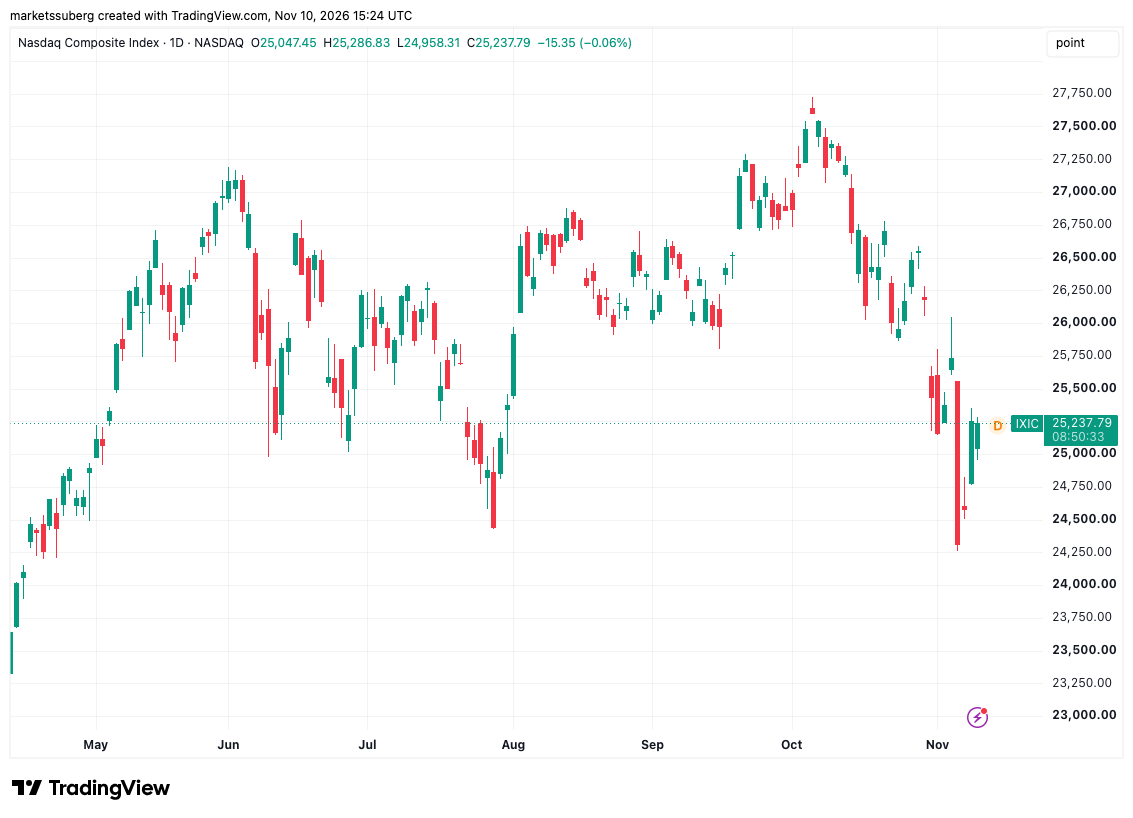
The Nasdaq Composite opened down 0.6% before recovering its losses. Mosaic Asset Company described sell-side pressure as “extreme” and said it could indicate a long-term bottom for the index. That assessment is not confirmation of a reversal in stocks or Bitcoin.
Source: cointelegraph.com (originally published 2026-11-11 00:25 UTC+8)